Acticert Certifications – First Aid and CPR Blended Recertification

Recertification confirms that one’s competency has been upheld after initial training and offers a second certification for a time determined by the course. This must be completed before the first certification period expires.

Running a recertification course is different from running a beginner’s course. Participants in a recertification course seek to maintain the abilities and knowledge they acquired during their initial training. Since they have been in a First Aid classroom and have completed training, they are familiar with the course material and may have utilized their First Aid and CPR Blended abilities in a genuine emergency. Because of this, they have different learning demands than initial trainees, and their course is taught in a different way (in terms of teaching hours and learning activities). Except for the teaching hours required for each course, all standards for recertification courses remain the same.

How can I get certified or recertified?

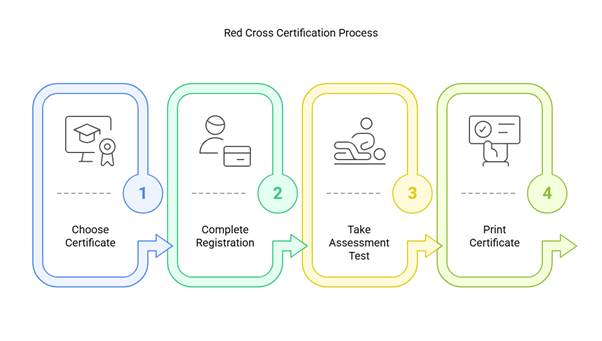
  • Contact an authorized First Aid provider and sign up for the blended course. You can obtain an interim certificate for the knowledge acquisition element of the certification after completing the online course. The online portion of the course must be completed prior to the classroom portion.
  • To receive full re-certification or certification, an instructor needs to examine your practical abilities to confirm that the requisite first aid competencies have been proven.
Can I Continue To Practice FIRST AID/CPR Even Though My Certificate Has Expired?

With an expired certificate, you can no longer practice First Aid/CPR.

How Frequently Should The Training Be Revised?

Most First Aid certifications are only valid for three years at most. Training organizations are allowed to set higher standards and grant certifications with a two-year validity period.

To keep your certification valid before it expires, you must go through the training once more.

Before your original certificate expires, you can renew your standard First Aid certification once by finishing a one-day course with the original provider. The term “renewal” will appear on the new certificate.

If you’ve previously had your First Aid and CPR Blended renewed, you’ll need to obtain a new one from an authorized institution when your current certificate expires.

To Register Please visit the link : https://acticert.com/red-cross-certification-registration/

Why do the Majority of Jobs Require CPR and First Aid Training?

vsdfsdfsdfsdfsdf

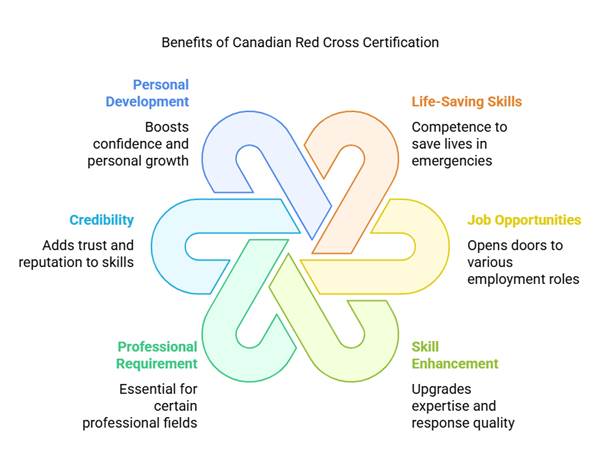
CPR and First Aid training courses are not just essential for nurses and personal support workers. Most industries want personnel and employees with First Aid certificates since knowing how to respond in an emergency situation is beneficial, no matter the job scenario. Furthermore, having a CPR certificate in your name will increase your appeal to employers across a wide range of industries and jobs. In fact, in many circumstances, this is a condition for work.

We cannot prevent accidents, illnesses, or injuries from occurring, whether we work in an office or on a physical, hands-on job in the trades. Nowadays, employers are concerned with creating a safe working environment, and therefore they frequently hire someone with CPR and First Aid certifications without giving it much attention.

What are the Occupations that Demand CPR and First Aid Training?

The following are some vocations and careers that require CPR and FIRST AID Certification:

Healthcare Professionals

The healthcare vocations that need CPR certification include:

  1. Nurses (RN)
  2. Licensed vocational nurses (LVN)
  3. Medical assistants
  4. Respiratory therapists
  5. Hospital technicians
  6. Dentists
  7. Dental assistants
  8. Paramedics
  9. EMTs
  10. Pharmacist and pharmacy technicians
  11. Physical therapists
  12. Occupational therapists.
Outside Healthcare

The jobs outside of healthcare that still require certified CPR and First Aid training are numerous including:

  1. Child Care Providers
  2. Volunteers
  3. Construction workers
  4. Lifeguards
  5. Firefighters
  6. Coaches and personal trainers
  7. Electricians
  8. Flight attendants
  9. Jail and prison personnel
  10. Nanny and Babysitters
  11. Teachers and other school staff
  12. Security guards
  13. Parents
  14. Law enforcement
  15. Yoga teachers
  16. First Aid representatives
  17. Emergency responders
  18. Social workers
  19. Students

Conclusion

Getting a CPR certification has several advantages. Since it can keep you safe in the event that you need to give CPR or Emergency First Aid to someone else while simultaneously without negatively affecting yourself in the process, it is helpful for almost any job. Thanks to blended certification courses, obtaining your CPR certification is now more easier than ever for everyone who needs it.

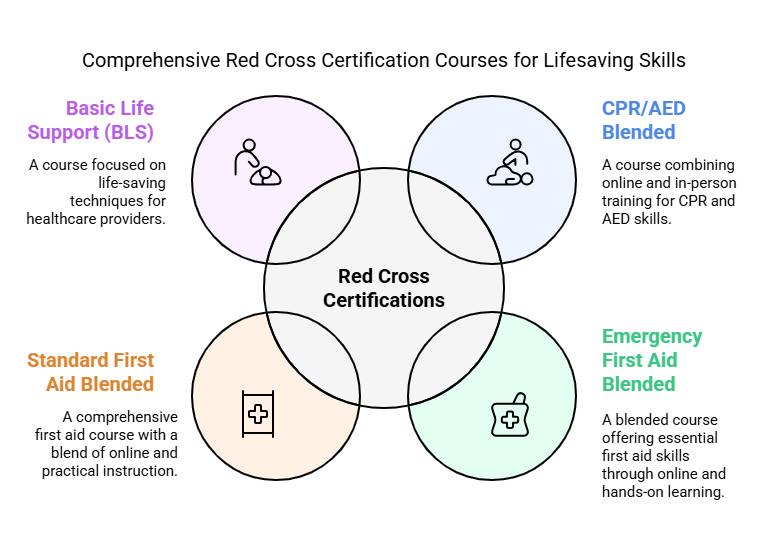
Acticert certification also provides blended CPR/AEDFirst Aid, and Basic Life Support courses if you want to finish your CPR training as a requirement for your employment or just for your own peace of mind.

First Aid Corporate Training with Acticert Certifications

As a Canadian Red Cross training partner and leading authority in First Aid, our knowledge sets the bar when it comes to providing the most thorough and cutting-edge First Aid training programs for the workplace, academic needs, or general curiosity. We provide various certifications and Courses that meet legislation requirements for provincial /territorial worker safety and insurance boards and include the latest first aid and CPR guidelines to become certified in First Aid, CPR, and AED.

Our most popular Workplace First Aid Courses are:

  1. Standard First Aid CPR Level C blended  
  2. Standard First Aid CPR Level C Blended Recertification  
  3. Emergency First Aid CPR Level C blended 
  4. Emergency First Aid CPR Level C blended Recertification 
  5. CPR/AED Level A and C blended  
  6. CPR/AED Level A and C blended Recertification 
  7. Basic Life Support

Why Chose Corporate Training Programs

Most organizations in Canada require staff who are trained in First Aid, CPR, and AED to offer urgent care in the case of an injury or medical emergency. First Aid certification and equipment requirements vary based on regulatory authority, industry, workplace dangers, and personnel count.

ACTICERT Certifications provides First Aid training classes in several forms across Ontario to match your specific occupational health and safety requirements. We will collaborate with you to provide a tailored solution to satisfy your occupational health and safety requirements.

First Aid Training Formats

ACTICERT Certifications offers the most complete training formats and industry knowledge to create excellent programs for building confident first responders.

  • Public in-Class Training: Available at 6 training locations across Ontario
  • Private Classes: Set up a private class at a schedule and location that works for you
  • Blended Learning: Reduce up to 50% of your required classroom training time with our blended learning

Corporate Client Services – Contact Information

Our customer service professionals are available to assist you in determining your first aid needs and developing a thorough strategy that considers your workplace’s legal requirements, particular workplace risks, and working conditions. 

To schedule the group training, please contact us:

Email: info@acticert.com

Contact: https://acticert.com/redcross/group-training/

Phone: +1 905-487-7043 

Why a Food Handler’s Certificate is Essential for Your Food Business in 2025

Food safety is crucial to prevent consumers from health risks associated with commonly known allergens and foodborne illnesses. It is a good enough goal to reach in and of itself, with the appropriate processing and handling procedures, but there are additional reasons. In 2025, that trust is more significant than ever. And how does a food operator gain that trust? It is with the food handlers certificate.

With awareness of food safety and stricter regulations rising, a food handler’s certificate is an advantage and a must-have for any food business that wants to be successful in the long run. This blog will exclusively focus on why food business owners must consider food handler certification in 2025, including the legal implications, benefits, and how ActiCert can assist with certification. Let us get started.

What is Food Handler Certification?

The food industry is expanding every day and exceeding the consumers’ expectations on a global stage in terms of quality and safety ever since food safety certification came into existence. Food safety is one such accountable factor that emerges as food operators are rising to the need for food consumption, maintaining proper hygiene, the working conduct of laborers, and avoiding food contamination. One of the deciding factors for business success is the food handler certification.

By getting the best food handling experience, safety, and overall food quality, food handlers certificate is crucial to protect yourself and the customer from falling ill. The process often requires the individual to take a basic food handling course, either online or in person, and then pass an examination to demonstrate competency.

Many local health authorities in Ontario and Alberta require food handler certification. These certifications also ensure that anyone who handles food, be it anyone involved in food preparation or service to the customer, is well-versed in crucial safety protocols that must be in place during food processing to ensure the safety of the customer and the business.

Food Handlers: Legal Requirements

In Ontario and Alberta, food safety certification is legislated to protect public health. Food premises in Ontario, for example, must have at least one certified food handler on the premises at all hours of operation. The food handlers certificate is approved and recognized by the Ministries of Health and accepted by all health boards within the province/territory.

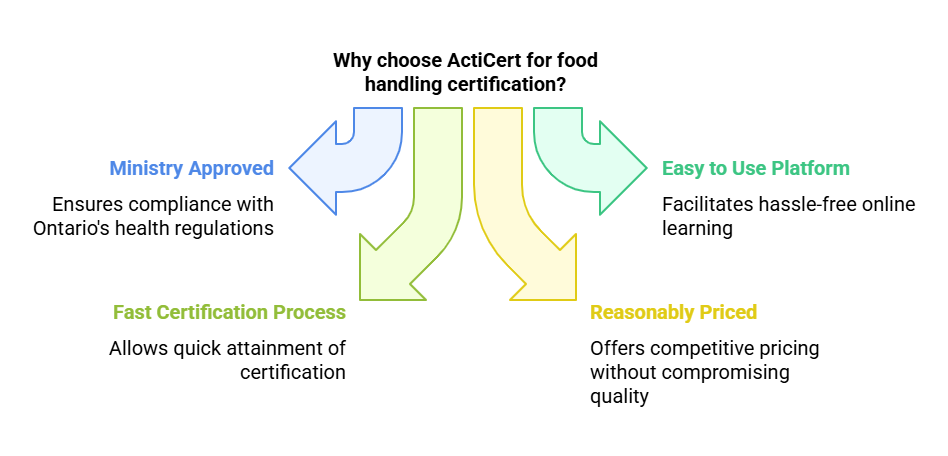
ActiCert Inc. is a recognized provider of the approved food handler training program, consisting of both in-class and online modules.

Specific Regulations: While the details do differ from municipality to municipality — like Mississauga, Toronto, and Brampton in Ontario — the underlying principle remains the same: businesses that deal with food must make sure the hands working on our food are well trained to do so safely and, most importantly, within the law.

Consequences of Non-Compliance: Not following food safety guidelines can result in heavy fines, temporary closures, and eventually permanent closures. However, employing certified food handlers in your operations minimizes these risks and indicates that you are a law-abiding citizen.

Benefits of Obtaining a Food Handler’s Certificate

Obtaining a food handler’s certificate benefits individuals as well as businesses-

For Individuals:

Enhanced Job Opportunities: A food handler’s certificate may open opportunities for food service employees. As several employers today require their staff members to become certified, having a food handler certificate might help you get a job.

Career Advancement: The food handler’s certificate training will provide knowledge and understanding of food safety practices and factors contributing to foodborne illness outbreaks, food contamination, food temperature, and personal hygiene practices. Individuals can use it to handle food and prevent foodborne illness outbreaks in any environment.

For Businesses:

Improved Customer Trust and Loyalty: Consumers have trust and loyalty towards those businesses that place high importance on food safety. Displaying a food handler’s certificate can enhance your business reputation and attract more customers.

Decreased Foodborne Illness & Liability: More skilled food servers will prevent foodborne diseases, which means fewer cases of diarrhoea and a lower risk of costly lawsuits, negative press, and even reputational loss.

Edge Over Competitors: In a competitive market, showing you care about food safety can give you an edge over the competition. Certification tells your clients that you are operating at the highest levels of hygiene and quality.

The Role of ActiCert in Food Handler Certification

ActiCert offers training and certifications to professionals, students, and immigrants who wish to begin and progress in their careers. By providing comprehensive training for everyone, we hope to increase employability and offer options for upskilling and second careers. Professionals seeking active, focused knowledge that has been verified and certified for their chosen industry are the target audience for ActiCert. Our teachers are seasoned, highly qualified professionals with a wide range of knowledge and teaching skills.

Here’s a quick link for the ActiCert’s food handlers’ registration form: https://acticert.com/food-handler-certification-registeration/

ActiCert Food Handler Certificate Course Summary

In Ontario and Alberta, the ActiCert food handler certification course is recognized and approved by the Ministry of Health (MOH). This training and certification program equips the participants with in-depth knowledge of food safety and handling practices.

Course Content:

This food handling course covers some core topics, including-

Legal Requirements:

This module clearly defines, for those who own, operate, supervise, and handle food businesses, legal responsibilities and obligations linked to various roles and the methods by which Public Health Inspectors attempt to enforce compliance through risk assessments and inspections. It is critical to learn the legal responsibilities of businesses to remain compliant and safeguard public health.

Food-borne illnesses:

This part provides information on the causes, seriousness, signs, and symptoms of foodborne illnesses. It focuses on the disastrous implications these cases can have for people and places of business. It includes coverage of chemical, physical, allergen, and microbial contamination. It explains that complaints of foodborne illness should be reported to the local public health unit and that allergic reactions can be dangerous, including abdominal cramps and life-threatening anaphylaxis.

Food Contamination:

Food contamination can come from various sources during harvesting, processing, or transportation. This module recognizes various sources of contamination, such as microbial pathogens, damaging chemicals, physical hazards, and allergens. By knowing the causes of food contamination, the food workers will realize the importance of preventive measures to ensure that the food products are safe for the consumers.

Microbiology basics and influences on microbial growth:

This section introduces fundamental concepts related to microorganisms and their growth conditions. It consists of diverse pathogens like bacteria, viruses, and fungi that are capable of causing illness through what we eat. It, of course, can depend on what the bacteria may be doing.

However, the other parts of this section cover spore-forming bacteria, carriers, dangers, and risks of high heat, and some other things that can cause bacteria to grow. Knowing bacteria and the compounds that make them develop will keep you from getting sick.

Food Safety Management:

This section describes what a food safety system is. This involves HAACP and critical control points. It creates a plan so staff can remain safe in their surroundings and be in control of the food process, so nothing damaging is done in any area of preparing food.

Controls of time/temperature for the safety of food:

Temperature control is essential for your safe food. Too cold, too hot, or just the right temperature. If any of these factors are at play, then contamination becomes a risk. Now this section covers the proper procedures on how you can prevent your product from reaching the point of contamination.

Personal hygiene and sanitation practices:

The only way to be safe from contamination is to remain hygienic in the workplace. If cleanliness is neglected, bacteria can grow and lead to foodborne diseases. That part tells a little bit about hand-washing practices overall, how it’s done personally, and why it’s important.

Food storage, preparation, cooking, and serving techniques:

There is a risk associated with food contamination at each step in the food handling process. About how it’s stored, prepared, cooked, and even served. Knowing more about each of the key processes, you will be better placed to manage risks and prevent any contamination along the way.

Course Format:

ActiCert provides various learning formats to meet your needs:

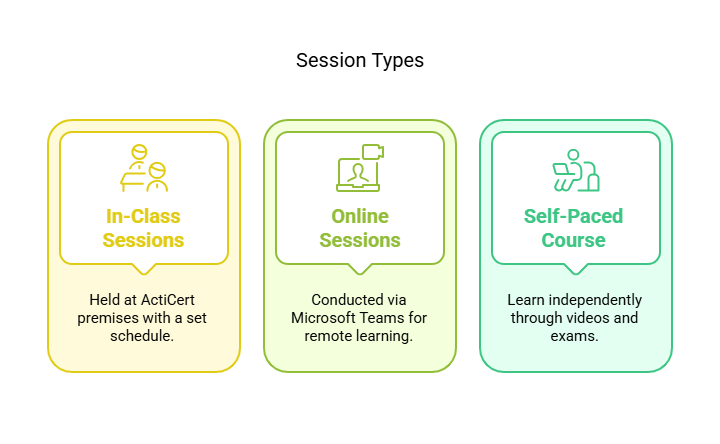
  • Online Instructor-Led Sessions: Conducted on Microsoft Teams, where the candidates can study in the comfort of their homes. These sessions are usually from 10 AM to 5 PM.
  • Face-To-Face Sessions:Available at selected ActiCert locations across Ontario and Alberta, usually from 10 AM to 5 PM.
  • Food Handler Certification Cost and Duration:

It is a one-day course. The fees are as follows:

  1. Instructor-Led Sessions (In-Class): CA$ 50.00
  2. Instructor-Led Online Sessions: CA$ 40.00

Food Handlers Certificate Exam: Preparing

Moreover, you must prepare well for the food handlers certificate exam to pass your test. Here are some tips and resources for that study:

  • Review Course Material: Study/Familiarize yourself with all the course materials provided by ActiCert, including reference guides, online videos, and interactive activities.
  • Concentrate on Important Concepts: Key concepts to pay attention to include foodborne illnesses, temperature control, personal hygiene, and cleaning/sanitization procedures.
  • Practice Questions: Do practice questions and assessments to check your knowledge and identify what topics you need to study more.
  • Form Study Groups: Form study groups with fellow participants to discuss complex topics and share insights.
  • Understand Local Regulation: Get to know the specific food safety regulations in your region (Mississauga, Toronto, Brampton, etc.).

Common Topics Covered in the Exam

The Food Handlers Certificate Exam mainly covers the following topics:

  • Foodborne Illnesses: What, why, and how to avoid them?
  • Personal Hygiene: Handwashing methods, specific clothing, and health policy
  • Temperature Control: Appropriate temperatures for different kinds of food to cook, chill, and store.
  • Cleaning and Sanitization: Procedures for cleaning and sanitizing food contact surfaces and equipment.
  • Food Storage: Guidelines for storing food safely to prevent contamination and spoilage.

The exam is 50 minutes long and includes 50 multiple-choice questions. You must score 35 out of 50 (70%) or above to pass the exam. Candidates are only allowed to take the examination twice. Candidates who pass the exam will be issued a certificate immediately, and you can download the final certificate on the e-learning portal.

FAQ (Frequently Asked Questions)

What steps can I take to obtain a food handler certificate?

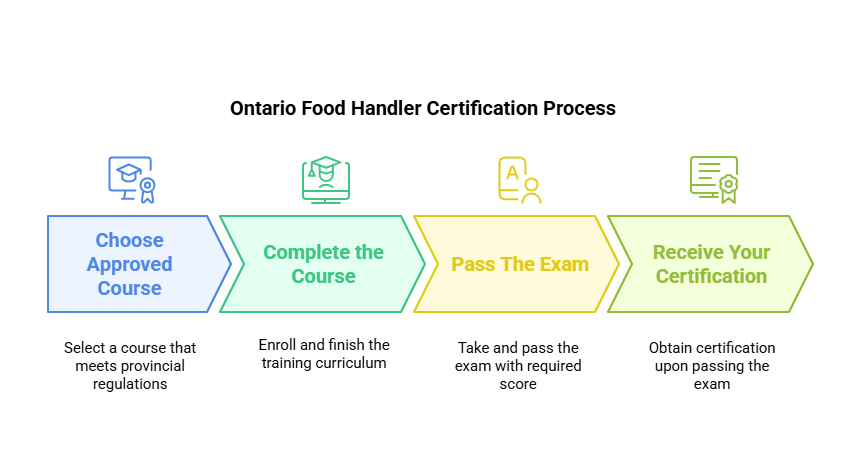
The prerequisite of obtaining a basic food handlers certificate requires going through a recognized training program like the Food Handler Certification Course operated by ActiCert, finishing the course, and ultimately passing the certification examination.

How much does it cost to get the food handler certification?

The cost varies depending on the provider and the food handler certificate course format. ActiCert offers courses ranging from CA$ 30.00 to CA$ 50.00.

How long is the certification valid?

The length of the validity period may depend on your region. It is best to check with your local health authorities for precise criteria. ActiCert food handler certification is valid for 3 years.

What if I do not pass the exam?

There is permission for a maximum of two attempts to pass the examination on ActiCert. If you do not pass the first time, review the course materials, and retake the exam.

Conclusion

A food handler certificate in 2025 means more than just passing a test; it signifies a commitment to food safety as a condition of a successful food business. Not only does food handler certification for you and your staff help with legal compliance, but it also fosters customer trust, minimizes liability, and provides your business with that valuable competitive edge.

With in-person and online certification options, ActiCert offers an efficient and convenient way to ensure you are certified as a food handler. By choosing ActiCert, you can equip yourself and your team to maintain the highest food safety standards.

Ready to take the next step in providing safety for your food business? To learn more about our Food Handler Certification Course and register for a time that works for you, check out our website now. You can also give us a call at +1 (905) 487 7043 or email foodsafety@acticert.com.

Do not wait anymore. Be proactive about food safety and future-proof your food business.

Acticert Certifications-Levels of CPR

Acticert Certifications-Levels of CPR

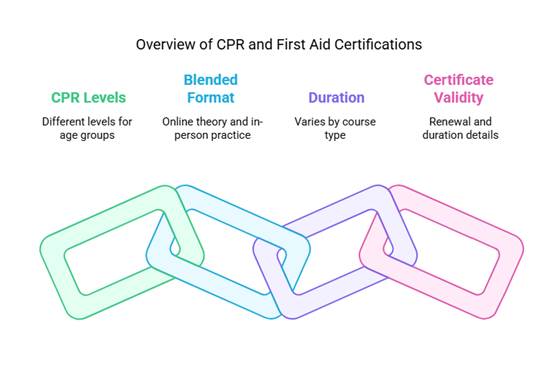
CPR/AED Course is classified into three levels: A, C, and BLS. Because the public does not receive the same training as those in the medical field, these levels are tailored to a specific audience.

A person could learn how to conduct CPR properly and learn the most crucial details through CPR training. In the workplace or in school, CPR instruction may be mandated. At Acticert Certifications, we work hard to give our students the knowledge they require to meet their needs.

Before registering, students should understand the different levels of CPR/AED Course. Please review the details below regarding CPR levels A, C, and BLS.

CPR Level A

Lay rescuers who are interested in learning about the fundamentals of CPR instruction are frequently advised to take CPR Level A. Adult CPR and choking protocols are included in this CPR level, along with the significance of prompt defibrillation. The CPR/AED Course level A course will only take 4 hours of your time, but it covers incredibly important and vital information regarding handling emergencies. The CPR Level A is provided through Canadian Red Cross courses at Acticert Certifications.

See the CPR/AED course for further details on the CPR Level A criteria.

Instructions for using an automated defibrillator on children are included in CPR Level B. It does not cover adult treatment techniques, making it an addition to rather than a replacement for the CCPR/AED Course. This course was available through Red Cross as a separate course but is now part of Level C. 

CPR Level C

CPR Level C includes instruction in two-rescuer CPR as well as all other facets of CPR theory and practice for adults, kids, and newborns. It is seen as an inclusive strategy. Police, firefighters, and lifeguards who might need extensive training for their job requirements are frequently advised to complete CPR Level C.

If you want to book an appointment for any of the above-mentioned courses, Please register here https://acticert.com/redcross/basic-life-support-certification/

BLS Level training is intended for first responders and healthcare professionals who need more advanced life support skills. The course trains Health Care Providers to respond to medical emergencies (e.g., doctors, nurses, paramedics, and allied healthcare professionals).

BLS-768x512

CPR BLS includes the following courses:

BLS Standard First Aid and CPR – Valid for 3 years

Basic Life Support (BLS) Course – 1-year validity

When looking for a CPR, BLS, or First Aid class, a person should look for a reputable provider. BITTS Certifications is an authorized Red Cross Partner and has been offering CPR classes in a variety of locations throughout Ontario. Please contact us for more information.

Blended First Aid CPR Training With Acticert

The Canadian Red Cross offers a blended course called Online First Aid CPR Training. The blended (online/in-person) courses are available for both Standard First Aid Full Certification and Recertification at Acticert.

What is blended learning?

Each blended learning course is divided into two sections. Participants must first complete the selfpaced online component, which includes a knowledge evaluation, and then successfully completes an instructor-led classroom component to achieve full certification a skills practice and an evaluation session. Participants should complete the classroom component within six weeks of completing the online component. If a participant does not attend a classroom session within this time frame, they will be required to retake the online component before being admitted to the classroom. The completion period in Ontario is four weeks.

How to register for blended course sessions?

Participants will be registered online and receive instructions to access the online course through the Red Cross. Each module has an examination designed to ensure a participant’s understanding of the subject matter. Once completed student will receive a temporary certificate from the Canadian Red Cross which is valid for 90 days. If you wish to receive a certificate, you will also need to attend an in class session.

Participants will be registered online and given instructions on how to access the online course via the Red Cross.
Each module includes an examination to ensure your comprehension of the material.

Once completed, you will receive a 90-day temporary certificate from the Canadian Red Cross.

Students must also attend an in-class session if they wish to receive a certificate.

Registering in three simple steps:

  • Registration: Receive instructions and information about online training. Prior to the in-class date, the online portion of the training (8 hours) must be completed.
  • Certification: The student will receive the Red Cross certificate within 48 hours.
  • Attend the classroom portion of the training.

After registering online, the participant will receive an email from the Red Cross with a link to the course content. The link will be sent to you within 1-2 business days of registering.

For more information visit: https://acticert.com/redcross/standard-first-aid-blended/

Our Recent conducted First Aid and CPR / AED Blended sessions:

first aid
first aid
first aid 3

The Acticert Certifications team uploads the upcoming in-class course session dates on Acticert website.

To Register for the session, visit: https://acticert.com/red-cross-certification-registration/
If you have any questions or concerns, please contact us by phone or email.

Key Things Elaborated in Alberta Safe Food Handling Regulations

There are strict safe food handling in alberta regulations in Canada. These regulations are created and enforced at the federal, provincial, and territorial levels. Health Canada sets all the laws, and Canadian Food Inspection Agency [CFIA] ensures their enforcement.

CFIA ensures the enforcement of these regulations through regular inspections, process reviews, audits, and stringent compliance with safe food for Canadian regulations. There is something everyone in Canada needs to know about it.

Every province has its regulations to ensure food safety at the provincial level. These regulations differ from one province to another. Let us explore further…

Provincial Safe Food Handling Regulations in Alberta

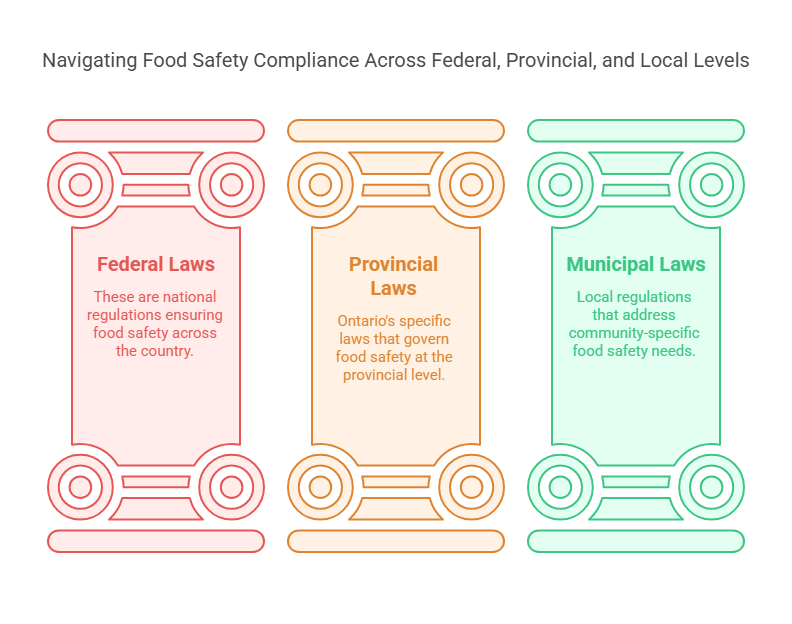
The Federal Government of Canada and the Alberta Government expect all food business owners and professionals to comply with the relevant regulations—compliance with the following rules is mandatory for food industry professionals, food brands, and food business owners, and more specifically with:

  • Federal Government Safe Food Handling Regulations
  • Alberta Provincial Safe Food Handling Laws
  • Local municipal regulations

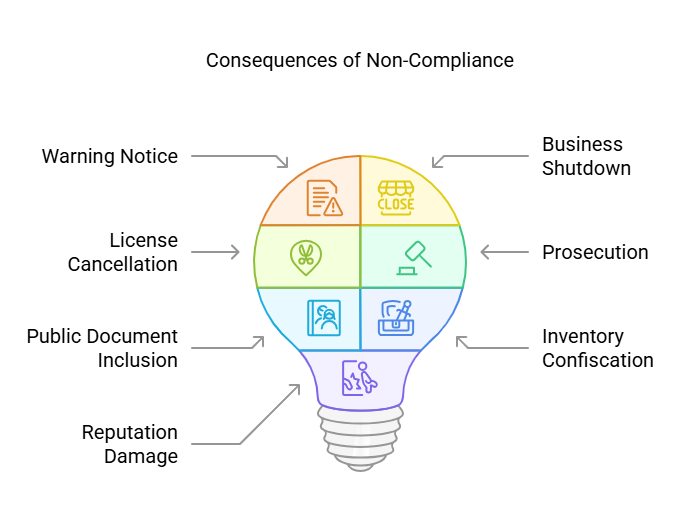
Those who comply with these regulations find it easy to climb the growth and access ladder in their career and on the business front. Disobedience of these regulations can result in:

  • Hefty fines
  • Prosecution risk
  • Business closure
  • Inventory confiscation
  • Entry in public records
  • Damage to your reputation and food business/brand’s reputation

Alberta Agriculture and Forestry and Alberta Health Services govern food safety regulations in Alberta, Canada. Listed below are those laws:

  • Alberta Food Regulation Act According to the Alberta Public Health Act.
  • Alberta Food Retail and Food Services Code.
  • Alberta Dishwashing Standards.

Alberta Food Regulation Act According To The Alberta Public Health Act:

This provincial regulation has several parts. All parts guide the different requirements food industry professionals and food brand/business owners in Canada must fulfill under all circumstances, including:

  • Permits and operations under permit.
  • Commercial food establishments.
  • Farmers’ markets.
  • Special events and temporary food establishments
  • Community organization functions.
  • Bed and breakfasts.
  • Low-risk home prepared food
  • Transitional, repealed, expired, and specifically dated food and related events.

All these parts have been elaborated. The act particularly highlights the following:

  • The actual meaning of safe food handler certificate holders and their responsibilities.
  • Types of food handlers.
  • What they can access.
  • Who is ineligible to be it.
  • Personal hygiene and health rules they must abide by.
  • How many of your staff members must hold a safe food handler certificate?
  • Food handling permits.
  • Food handling requirements for…
  • Special events and temporary food establishments.
  • Community organization functions.
  • Bed and breakfasts.
  • Low-risk home prepared foods.
  • All types of food handling areas.
  • All types of food sale and storage settings.

Who Should Fulfill These Requirements?

All food safety certificate in alberta holders must fulfill these requirements:

  • Commercial food establishments.
  • Farmers’ markets.
  • Special events and temporary food establishments.
  • Community organization functions.
  • Bed and breakfast.
  • Low-risk home prepared food.
  • Transitional, repealed, expired, and specifically dated food and related events.

Another important thing this law elaborates is the value of food safety certificate courses in Alberta, Canada, for food industry professionals and business owners.

Enrolling in a relevant course is the best option to learn these things easily in detail. This is something we help you achieve easily.

  • Alberta Food Retail And Food Services Code:

This provincial Safe Food Handling In Alberta regulation provides clarity about everything. For example:

  • Food handler certificate training.
  • Essential components of food safety training courses you enroll in.
  • Knowledge about course learning outcomes.
  • Standards of certification you want to enroll in.
  • The value of trainers’ certification.
  • Continuing food safety training certification from a recognized program of the following…
  • Instructional courses.
  • Seminars.
  • Employee meetings.
  • Who exactly is/can be a food handler.
  • Types of Safe food handling certificate in alberta.
  • The best operating practices for a safe food handling in alberta.
  • The list of reasons for a food handler to value rules.
  • Food business site construction specifications.
  • Food business site design.
  • The facilities available at the food business site.
  • Walls, ceilings, floors, and dry, and wet areas.
  • Carpeting, floor drains, stairs, catwalks, and mezzanines.
  • Lightning, ventilation, and food storage areas.
  • Water and steam supply.
  • Sewage and refuse disposal.
  • Plumbing systems and overhead utility lines.
  • Hand wash stations, toilet facilities, and dressing areas
  • Food hazard controls and relevant measures.
  • Incoming material, temperature control measures, and water.
  • Food contamination prevention.
  • Packaging, labeling, transportation, and distribution of food products.
  • Proper food storage.
  • Dishwashing and pest management.
  • Dishwashing and pest management.
  • Cleaning and sanitation.
  • Use of chemicals and toxic substances.
  • Personal hygiene, overall hygiene, and consumable diseases.
  • Waste management and general maintenance schedules.
  • Education and training you should get.
  • The best food safety certificate training courses and their components.

The knowledge from food safety training can equip one with knowledge and skills about all these things. You will have every opportunity to build a successful food brand or business or career in the food industry.

This is another key thing all safe food handler certification holders should know. It stamps the value of every food establishment’s construction design. It should help dishwashers remove physical soil from all surfaces and sanitize dishes using hot water or approved surfaces of dishes.

The Government of Alberta expects one to understand.

  • Mechanical dishwashing standards in Alberta.
  • Commercial spray-type dishwashing machines.
  • National sanitation foundation standards.
  • Commercial spray-type dishwashing machines.
  • Field evaluation procedures for spray type machines to wash dishes.
  • Studying data plate machines.
  • Process for checking temperature in dishwashing machines.

Overall, the course will guide you in detail about everything related to it. The skills and knowledge you will gain will open floodgates of opportunities for you throughout the food industry in Canada. 

From the best infrastructure to experienced faculty, ActiCert has everything to exceed your requirements and expectations. ActiCert will detail all these things for you in the next post. Fill out the quick application form on our official website for admission to the best food safety certificate training course in alberta. ActiCert can help you get going on a career for yourself in food handling!

Proctor Certification in Canada: Understanding Roles, Training Essentials, and Career Prospects

In an increasingly digital and remote learning environment, the role of a Proctor Certification In Canada has become more prominent than ever. Proctors ensure that examination integrity is preserved by observing test-takers, preventing cheating, and maintaining exam standards.

For individuals interested in pursuing a proctoring career, a successful certification as a proctor gives a chance for many opportunities ahead.

Proctors have a lot of responsibility for maintaining the integrity of an examination by seeing to it that guidelines established are followed and that there are checks against academic dishonesty.

If you are thinking that being a proctor is something you would like to go into, this guide is here to walk you through the duties and obligations of a proctor, training requirements, certification process, test proctor training, and career options.Proctor Certification In Canada

Who is a Proctor?

A proctor shall supervise examinations to promote and ensure academic integrity and the examination policies. The functions of a proctor vary depending on whether employed in educational institutions, Proctor Certification In Canada certification authorities, or professional testing centers.

With the rise of online education, remote proctoring has also gained popularity, allowing candidates to take exams from various locations under strict monitoring.

There are various methods of supervision that will depend on the type of examination. Either the proctor might monitor it in person or assign a remote proctoring function.

  • In-person proctors are typically responsible for administering examinations in places considered secure, such as schools, universities, and testing centers.
  • Remote proctors, on the other hand, supervise test-takers via specialized software designed to preserve security and curb cheating.

What Does a Proctor Do?

Proctors Certification In Canada supervise an examination and ensure students conduct themselves according to the rules and regulations.

They serve as a neutral party to assure fairness and a competition-free environment in examinations. Proctors may work in universities, colleges, corporate training centers, and government offices and agencies.

Proctors have responsibility far beyond simply watching over test-takers, instead being quite knowledgeable in technicalities, such as how to work the exam software, observe for suspicious behavior, and report any instance of violation.

They also assist in verifying the identity of the candidate or test-taker before the start of the examination.

Roles and Responsibilities of a Proctor

Proctors play a critical role in upholding the credibility of the examination process. Their responsibilities include:

  • Confirming the identity of candidates before the start of the examination to prevent fraud.
  • Explaining the rules and guidelines to the candidates under examination, ensuring complete clarity before the start of the examination.
  • Looking out for any sign of cheating or violation of rules, either in-person or remotely.
  • Dealing with technical issues, especially during online proctoring when both software and internet connectivity play a crucial role.
  • Report any allegations or breaches of examination matters to the competent authorities.
  • If any distractions occur in the testing room, work to neutralize them as threats to exam integrity.
  • Assisting candidates with procedural concerns before and during the exam, providing guidance when needed.
  • Collecting and securing exam materials (for physical exams) to prevent leaks or tampering.

Training Essentials

Becoming a certified proctor in Canada requires specific training to equip individuals with the necessary skills and knowledge. Test proctor training programs often cover the following:

  • Integrity of Assessment and Ethics: A background awareness of ethics and academic honesty in regard to administering an examination is imperative. The proctor is obliged to recognize all forms of academic misconduct and its correct redressal.
  • Technical Skills: Since remote testing has seen a considerable rise, the proctors must be adept with the usage of proctoring software, working with a webcam, and employing AI-based monitoring tools. This training means that the proctors should be able to set up and troubleshoot these systems.
  • Policies and Regulations: Each institution or testing agency has its own regulations that the proctor must follow. These training programs ensure that a proctor understands the varying provisions. This alleviates discrepancies in exam administration.
  • Crisis Management: Skills for handling difficult situations like technical failures, candidate malpractices, or emergency situations can be learned with test proctor training. The proctors must therefore learn to handle an emergency situation with confidence.
  • Communication Skills: Communication is central to a proctor’s role. Proctors must offer clear instructions and enforce rules while staying polite and confident.

To gain all such skills, you must take a Proctor Certification In Canada course. Several test proctor certification programs are available through educational institutions, which offer both real-time and online test proctor certification tailored to different proctorship types.

How to Become a Certified Proctor?

Becoming a certified proctor in Canada involves the following steps:

  • Eligibility Criteria: Most of the certification programs prefer candidates to have a minimum of high school graduation. Some institutions might prefer candidates with postsecondary education or experience from a training program.
  • Select a Proctor Certification Program: Enroll in a certificated course in proctoring, gaining more knowledge on exam supervision, ethics, and problem-solving skills in technical issues.
  • Complete the Training: These programs usually consist of theoretical lessons, practice assessments, and case studies to equip candidates with adequate skill sets
  • Certification Exam: At the end of the proctor certification course, the candidates should pass a certification examination that evaluates their understanding of proctoring procedures and ethics.
  • Become a Certified Proctor: Some institutions or regulatory bodies make it compulsory for certified proctors to register with them before they may offer their assessment services.

Where to Take the Proctor Certification Course?

If you are seeking to be certified as a proctor in Canada, ActiCert will provide you with the best proctor certification program.

ActiCert offers an all-around certification program to train people on how to properly monitor exams, prevent cheating, and handle different testing situations effectively.

The 20-hour proctor certification course includes instructor-led online sessions for 8 hours and practical training for 16 hours. ActiCert provides this training pan Canada across all provinces.

Why Choose ActiCert?

  • Certification: ActiCert is a well-recognized and trusted certification body in Canada for proctor training.
  • Detailed Course Material: The program encompasses all aspects of exam security, ethical aspects, as well as technical considerations for both on-site and remote proctoring.
  • Flexible Learning Options:ActiCert provides 8 hours of instructor-led online sessions that allow learners to train at their individual pace and own time.
  • Affordable Fees:The certification program is offered at a very reasonable price, thus standing within the means of budding proctors.
  • Industry-Relevant Training:The test proctor training is designed to meet the latest industry standards, ensuring that certified proctors are well-equipped to handle real-world exam environments.

Why Should You Take This Course?

Taking a proctor certification course provides numerous benefits, including:

  • Career Progress: Certification lends professionalism to your resume and enhances employment opportunities in scholarly and business fields.
  • Flexible Work Opportunities: Most proctoring opportunities permit remote work, which is an excellent choice for individuals who desire flexible work opportunities.
  • Evolving Industry Demand: As a growing number of online tests are being conducted, there is a growing demand for qualified proctors.
  • Professional and Ethical Training: The program provides you with information regarding exam security, ethics, and the technicalities involved in remote proctoring.

Future Career Prospects

The demand for certified proctors is on the rise as online learning and remote testing continue to grow. Career opportunities exist in:

1.Educational Institutions

Universities, colleges, and schools need proctors for both on-site and online tests. These institutions usually look for properly trained individuals to ensure the integrity of their tests.

2. Professional Certification Bodies

Organizations that administer licensing tests for different professions require proctors to provide equitable testing. Healthcare, finance, and law industries need close monitoring for certification tests.

3. Corporate Training Programs

Several organizations carry out employee evaluations and professional training sessions that need to be proctored. Maintaining compliance and integrity in the testing rooms of companies is an emerging industry.

4. Government and Legal Sectors

Government agencies frequently need proctors for licensure tests. These positions offer secure career prospects with further training in the management of confidential information.

5. Testing Centers

Standardized testing in Canada is mainly done at testing centers either in digital or offline format. Testing organizations frequently recruit proctors to administer standardized exams.

As test methods and technology evolve continuously, proctors who have higher levels of training in computer-based testing tools and AI-driven proctoring will probably have more successful careers.

As distance learning becomes more prevalent, there will always be a need for trained proctors, thus providing a solid and fulfilling profession.

Conclusion

Canadian proctor certification presents an attractive career opportunity for individuals who want to preserve the integrity of the examination process.

By achieving the requisite test proctor training and certification, candidates can set themselves up for secure and rewarding careers in the education, corporate, and professional certification industries.

With the trends in learning and assessment continuing to shift, the work of proctors will never be more important in the preservation of a fair and secure test-taking environment.

Whether you are looking for a job, new to such a role, or looking to refresh your skills, doing a proctor certification course will provide you with all the information and practical training you need.

This course is for anyone who wants to become a test administrator or proctor for standardized tests from Meazure Learning/Yardstick, MET, IELTS, Pearson Vue, CELPIP-Prometric, PLAB, and more.

Register with ActiCert today to complete your proctor certification course. For more information, you can call +1 (905) 487 7043 or email info@acticert.com.

Frequently Asked Questions (FAQs)

1. How long does it take to become a certified proctor in Canada?

The duration of a proctor certification course varies, but most programs can be completed within a couple of days or a few weeks.

2. Do I need prior experience to become a proctor?

No prior experience is required, but familiarity with test administration and security protocols is beneficial. You can take a Canadian Proctoring Course offered by ActiCert to gain all the knowledge

3. How to become a proctor?

Proctors are professionals who oversee the test-taking process. The proctors are hired at educational institutes or testing centers so that standardized testing in Canada is completed under strict supervision.

4. What is the salary range for certified proctors in Canada?

Salaries are influenced by experience, employer, and location but average hourly pay falls between CAD 15-25. Certified proctors can make up to CAD 40,000 to 50,000 per year.

5. Can I work as a remote proctor?

Yes, many certified proctors work remotely for online exams using AI-assisted proctoring platforms.

FOOD SAFETY CERTIFICATE: LEARN TO USE DIGITAL THERMOMETERS FOR SAFE FOOD HANDLING

A food safety certificate is mandatory for food business/brand owners and professionals in Canada. This document proves you are a professional with authentic and credible food safety, handling, and storage skills essential to value customers’ health.

Canadian employers value food safety certificates for many reasons. Comprising the list is easy compliance with the federal, provincial and municipal food safety regulations in Canada, value to customers’ health, and hassle-free hiring of a certified, skilled, and experienced professional familiar with safe food handling, personal hygiene, Time and Temperature Controls, Proper Food Storage, Cooking and Cooling Foods, and Housekeeping and Sanitation practices, proper use of thermometers, allergies and allergens, HACCP and Microbiology, growth of microorganisms, and related food health concerns.

We are going to talk about one of these things today. We already talked about it once in our previous post. We are going to further our discussion about food thermometers through this post today.

What Our Previous Post Taught You About It For Safe Food Handling:

The post focussed on several things related to the concept. For example:

  • Types of food thermometers.
  • Food thermometers designed specifically for certain foods.
  • Importance of food thermometer calibration.
  • When, how, and how often to calibrate a food thermometer?
  • Food thermometer calibration process.
  • Why is the proper use of a thermometer important for safe food handling?

This post will walk you through the process of using one of the food thermometers.

How To Use A Digital Thermometer For Safe Food Handling?

There is a process to use everything available in this world. Adhering to the relevant process helps us use things easily, safely, and effectively.

You must understand the process of using a digital thermometer to keep food safe and healthy. The first thing you should learn is its types

Digital Thermometers For Food Safety.

Most reputed food handlers in Canada usually prefer the following digital food thermometers:

  • Infrared thermometers.
  • Dial read thermometers.
  • Probe thermometers.
  • Pop up thermometers.

Let’s First Talk About The Process Of Using Infrared Thermometers:

A reputed food safety certificate holder will tell you about the process of using infrared thermometers the right way. For example:

  • You must choose the right infrared thermometer.
  • Learn to calibrate the infrared thermometer.
  • Prepare the surface properly.
  • Properly hold the thermometer.
  • Measure food’s temperature.
  • Verify the internal temperature of food.
  • Document the outcome.
  • Value maintaining personal hygiene.

Types of Food Infrared Thermeters

Mentioned below are the types of infrared thermometers food businesses/brands and professional food handlers use:

  • Basic handheld infrared thermometers
  • Dual infrared probe thermometers
  • High-precision infrared thermometers
  • Infrared thermometers with data logging
  • Infrared thermometers for frozen foods.
  • Multisensor infrared thermometers.

Enrollment in a reputed food safety certificate course is the best way for you to learn about these infrared thermometers accurately and in detail.

Now Learn To Use Dial Read Thermometers

Safe food handling in Canada is important for growth in the food business and career. Learning the process of using a dial read thermometer can help you experience both things. Take a look below at the process:

  • Value buying the right dial read thermometer.
  • Make sure you choose the right probe.
  • Learn dial thermometer calibration methods.
  • Prepare food.
  • Insert the probe the right way into the thickest part of the food.
  • The probe should not touch the bone or fat of turkey or chicken.
  • Hold it in place properly by the time the needle on the dial does not stop moving.
  • Finally, check the food safety temperature on the dial.
  • Effectively clean and sanitize the probe.
  • Value documenting food temperature reading.
  • Safely store the thermometer.

Note:

Learn to calibrate and handle the dial read thermometer handle to ensure safe food handling. It will help you check food temperature accurately.

Types Of Dial Read Thermometers:

There are different types of dial read thermometers professional food handlers use.  We suggest you make your choice based on your needs. Don’t forget to value their design, features, and applications for making the right choice. Take a look at the list below:

  • Bimetal thermometer.
  • Bi-metallic thermometer.
  • Liquid-filled thermometer.
  • Gas actuated thermometer.
  • Remote reading dial thermometer
  • Dial instant-read thermometer.
  • HACCP pocket thermometer.
  • Oven thermometer.

Every food safety certificate holder in Canada learns to calibrate the dial read thermometer correctly.

Don’t Forget Pop Up Thermometers:

Pop up thermometers also known as pop up turkey timers or pop up timers also help ensure safe food handling in their own way. This disposable thermometer is usually found in turkeys and roasts. It pops up like a spring when the meat reaches a certain/safe temperature. Experienced food industry professionals recommend the use of a traditional thermometer to ensure the accuracy of food temperature.

A pop up thermometer ensures food safety if you learn to use it. Here are the steps for you:

  • Do your best to buy the right pop up thermometer.
  • Always choose the right probe.
  • Learn pop up thermometer calibration methods.
  • Prepare and thaw the food.
  • Identify the thickest part and insert a thermometer in it.
  • Cook food.
  • Keep your eyes fixed on the pop up food temperature.
  • The verification of the food temperature using a traditional food thermometer also.
  • Remember to remove the food carefully.
  • Clean the pop up thermometer and store it back.

These are some steps you can follow to use a pop up thermometer to check food temperature. Don’t forget to choose the right pop up temperature for it.

Don’t be shy if you want to learn about this thermometer in detail. You should enroll in a safe food handling certificate course for it immediately.

  • There are different types of pop up thermometers.
  • Single-use pop thermometers
  • Reusable pop up thermometer
  • Protein-specific pop up thermometer
  • Multipurpose thermometers
  • Color-coded pop-up thermometer
  • Specialty pop-up thermometers

Learn To Ensure Safe Food Handling With Probe Thermometers:

This is another way for you. There is a process you must learn to ensure food safety using this digital thermometer. Follow the steps mentioned below:

  • Learn about the types of Probe thermometers.
  • Make sure you learn all probe thermometer calibration methods.
  • Value cleaning and sanitizing it every time you use it.
  • Understand the process of inserting the probe thermometer.
  • Check the food’s temperature with it.
  • Record the food’s temperature with it.
  • Clean and sanitize the probe thermometer once more.

Know The Types of Probe Thermometers:

You must ensure safe food handling by learning about the types of probe thermometers. Listed below are their types for your reference:

  • Instant-read digital thermometers.
  • Dial read or analog probe thermometers
  • Bi-metallic probe thermometers.
  • Pop up thermometers.

Our next post related to the food safety certificate will guide you about analog food thermometers, single-use food thermometers, food thermometers designed specifically for certain foods, and meat and poultry thermometers. You will learn about their types, and use methods for sure.

Food thermometers are an important part of food safety certificate courses in Canada. Get ready to learn about it in detail from experienced and skilled professionals if you enroll in the ActiCert food safety course now.

Register now!

CPR AED CERTIFICATION – HOW STABLE, UNSTABLE, AND VARIANT ANGINA TRIGGER HEART ATTACK

Red Cross CPR AED certification is essential to save lives under critical circumstances. The course equips you with the experience, knowledge, and skills you need to deal with several critical medical emergencies. Examples include but are not limited only to choking, stroke, deadly bleeding, angina, and heart attack. 

Our previous post talked about one of these health conditions. We threw light on several things related to it. Some of those are listed below for your reference:

  • What is it?
  • Its symptoms.
  • Its types
  • Methods to prevent it.

Even its severity was also discussed. The health condition we talked about is angina and heart attack. Today’s post will guide you about the way different types of Angina attacks result in heart attacks.

Can Angina Attack Result In Heart Attack?

This is the burning question. Facts testify it! Almost 2% of Canadians aged below or above 12 years of age suffered an angina attack between 2000 and 2001. 

The risk of death for Canadians with heart issues is at least three times more as compared to those who don’t have a history of heart health issues. 

As a result, one in four men and one in five women become a heart patient due to an angina attack by the age of 70 in Canada. Someone with complaints about heart attack and angina attack systems is admitted to a hospital in Canada every five minutes. A Red Cross CPR AED certification holder plays a crucial role in helping patients reach the hospital in time. 

Coming to the point, yes is the answer to this burning question. How does it happen? You will know about it once you know its types. You must know about it if you are a CPR certification holder in Canada. Take a good look below at the types of angina attacks.

  • Stable angina.
  • Unstable angina.
  • Variant angina attack.
  • Refectory angina attack.
  • Microvascular Angina.

Let’s tell you about the way these angina attacks become a heart attack.

How Stable Angina Becomes Leads To Heart Attack?

You should treat a stable angina attack like a serious warning. Ignorance turns it into an unstable angina attack that results in a heart attack for sure. You must value the following to prevent it from resulting in a heart attack:

  • Switch to a healthy lifestyle.
  • Regularly take your medicines on time.
  • Attend all your medical appointments.
  • Find ways to handle stress.
  • Include physical exercise in your routine.
  • Exclude fast food, carbonated, sugary, and alcoholic drinks from your diet.
  • Exclude overly greasy, oily, fatty, and processed eatables from your diet.
  • I immediately quit smoking.

Look for a CPR certification holder near you if you see someone experiencing pain in the following body parts:

  • Arms, shoulders, and neck.
  • Jaw, back, and stomach.
  • Sweating and heart palpitations.
  • Lightheadedness, nausea, and vomiting.
  • Shortness of breath, fatigue, and dizziness.

His or her wealth of skills, knowledge, and experience can save a patient’s life under critical circumstances.

How Unstable Angina Attack Becomes Results Heart Attack:

Insufficient blood flow and insufficient oxygen supply to the heart result in this type of chest discomfort. It usually happens when the victim is resting or sleeping. Even little physical exertion also becomes a reason for it. 

Aged people, chain (regular) smokers, diabetes, high blood pressure patients, or people with a family history of early CAD (Coronary artery disease) are usually more at unstable angina attack risk. 

If ignored or left untreated, an unstable angina attack quickly progresses to a heart attack. It can even lead to cardiac arrest or heart failure in extreme cases. 

You should immediately call a CPR AED certification if you notice someone experiencing the symptoms mentioned below:

  • Tightness, squeezing or crushing.
  • Burning sensations, choking, or pain.
  • A dull ache, shortness of breath, and sweating.
  • Fatigue, nausea, vomiting, or lightheadedness.
  • Shoulder pain and pain in my arms or jaws.
  • Neck pain, back pain, or other body parts.
  • Pain that responds poorly to nitroglycerin.

You should regularly consult your doctor if you experience one of these signs. 

Pay attention to things that trigger unstable angina attacks. Heavy exertion, stress, or cold exposure are some of these triggers.

Value to prescribed medications, medical appointments, dietary changes, weight management, stress management, and sleep hygiene is mandatory. Quit smoking and alcohol immediately and include exercise in your routine.   

What is more important is you should value becoming a Red Cross CPR AED certification holder. It will help save the lives of unstable angina attack victims. How? You will learn this during the course.

How Variant Angina Attack Results In Heart Attack

Variant angina attack, also known as Prinzmetal angina, in rare cases, can result in a heart attack. Listed below are some common symptoms of variant angina attack:

  • Exposure to cold weather conditions.
  • Consumption of medicines that narrow or tighten blood vessels.
  • Regular smoking, alcohol abuse, and cocaine use.
  • Reduction in exercise tolerance, lightheadedness, and chest pressure.
  • Tightness in throat, chest pain while resting, and discomfort while resting overnight.
  • If the pain moves to your arm, head, or shoulder.
  • Sweating, nausea, and dizziness.
  • Relief from symptoms after medications.
  • Symptoms reoccur after the medicine’s effect ends.
  • Recurrent pain episodes for 5 minutes to 15 minutes.

Take these symptoms seriously. Do not ignore these symptoms! If left untreated, these variant angina attack symptoms can result in a heart attack. Value to preventive methods suggested for stable and unstable angina attacks can help prevent variant attacks from becoming heart attacks. 

A Red Cross CPR certification is the best way to learn about what transforms angina attacks into heart attacks. Experienced healthcare and medical professionals teach about it to everyone in detail. 

ActiCert offers a CPR Certification course that equips learners with in-depth knowledge about it. Enrol now! Hurry! We don’t have many seats left in our batches. 

Earn your ActiCert Red Cross CPR certification by learning from experienced and skilled healthcare and medical industry professionals to prevent angina attacks and build a rewarding career. Moreover, we will talk about the way the rest of the angina attacks become a heart attack in our next post. We will throw light on it for sure. Therefore, keep coming back here daily.