How Physical Instruction Helps Students Learn the Best First Aid Techniques

How Physical Instruction Helps Students Learn the Best First Aid Techniques

Education and pedagogical practices have really changed. There was the old teacher-centered approach where students sat at desks, paid close mind to the teacher, took instruction in rote-like fashion, and writing in notebooks for prepare upcoming exam. Now we have student-centered approaches, online, and self-paced learning plus many other options. It’s great too as students can chose what method they want to learn with.

But there are simply some things that need a teacher, physical guidance, and hands-on learning. Try learning martial arts, roofing, or set decoration from a computer interface. These and other disciplines require a teacher-and-student combination to master theory and practice in tandem. First aid certification is the same and that is why it is so much in demand.

Splints, the Heimlich, and the Shock Box

It only takes going to watch a film involving a scene of some medical practice with a nurse, surgeon, or general practitioner to learn what NOT to do. They will watch someone doing CPR on a victim not breathing and scoff at the improper methodology. They howl at emergency surgeries to save a life of a comrade in a war film. But they aren’t wrong to laugh. Entertainment is great but it is not to be imitated when a real emergency arises. Hence why hands-on first aid is so crucial.

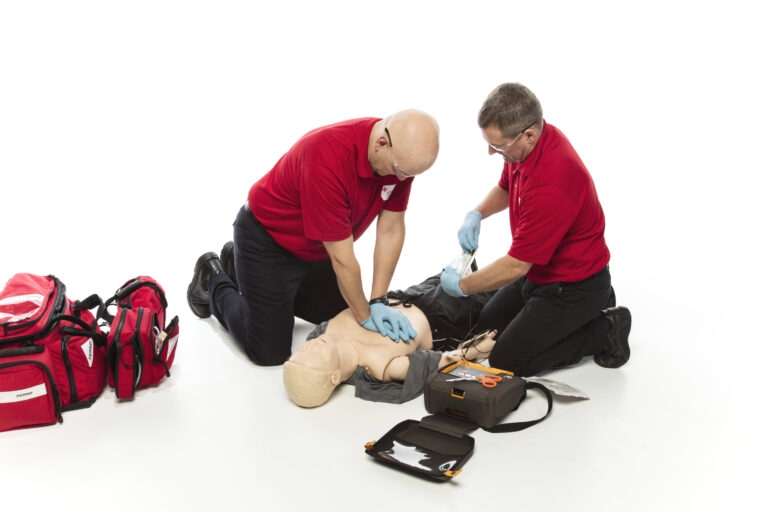
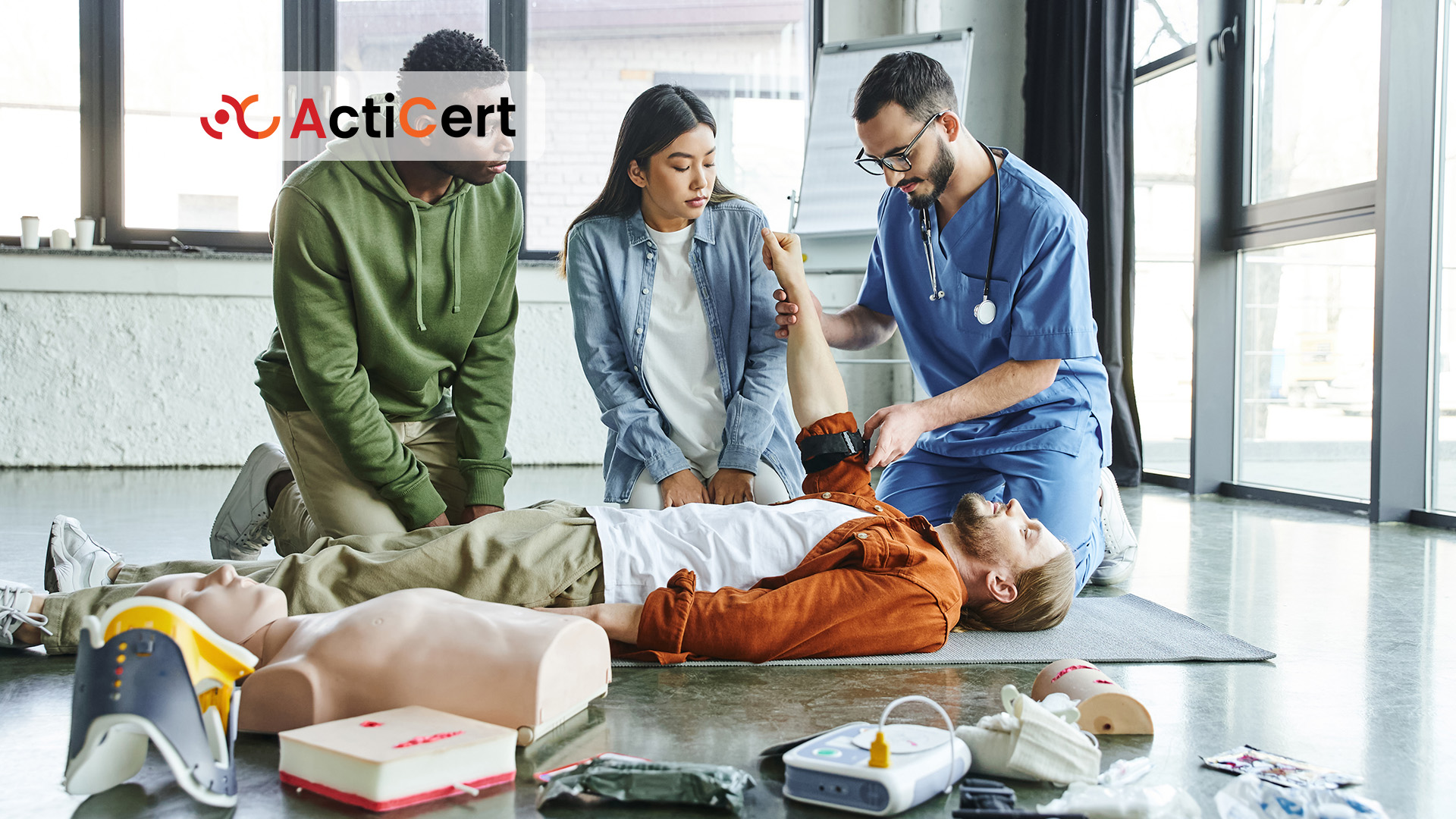
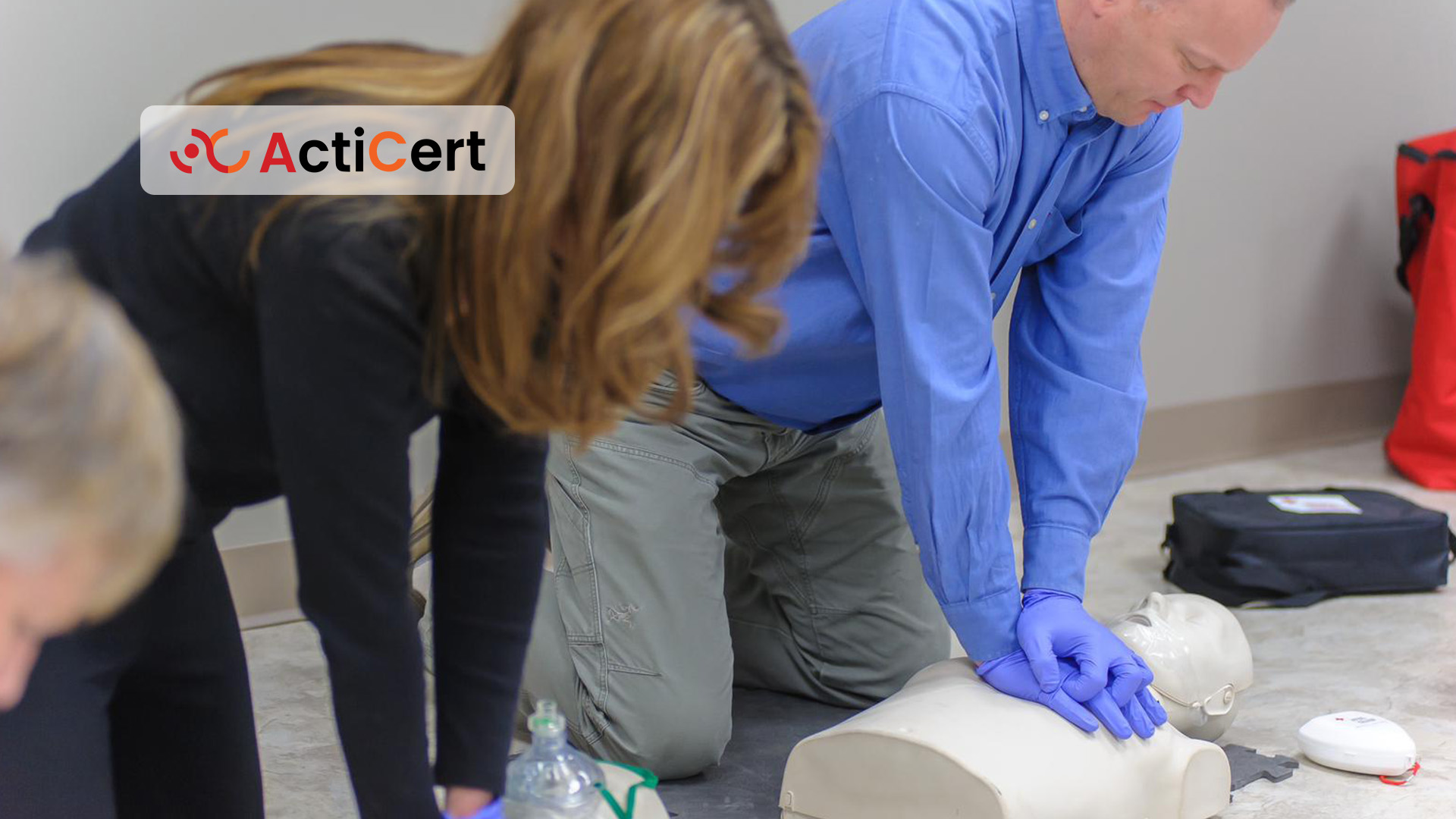
When students take the practical part of first aid training, they must get involved. If there’s a scenario of a big cut, they need to know bandaging and splinting. If someone is choking, proper Heimlich maneuver instruction is crucial not only to save the life but to ensure the victim’s rib bones aren’t broken. While the defibrillator is now commonplace, a lot of people don’t really know how to use that shock box to proper effect.

All of these and other techniques are covered in first aid with the instructor noting proper ways to do them while some tips to do them fast yet effectively.

Quick but Engaging

One might think that this sort of learning-by-doing takes a long time. But most first aid classes last a day or two at maximum. It’s fast-paced but packed with information and with activities to get students going with each new lifesaving practice. Once it’s done, students have everything they need to deal with emergency medical situations along with ability to use all the tools of the nearest first aid kit.

You may need to get a first aid certification fast for work or life situation. If so, go to ActiCert.com/redcross/ to find the best hands-on first aid to suit your needs and achieve it fast.

First Aid Certification is a Way to Build Your Own Professional Success

A high school diploma is a start. A college diploma or university bachelor’s degree is better. A master’s or higher degree is way better. Any certification you get on top is icing on the cake. That’s the common wisdom: having more education leads to better job opportunities and professional success. It makes sense insomuch as these academic achievements are not commonplace with all people and typically rewarded by employers to those that have it and can apply their education within their company or organization. Yet many people think having a first aid certification is not likely going to be rewarded by employers much. It’s a short certification and can be achieved without much investment, so it cannot have that much value.

It’s got more than professional value one might think.

The First Steps Up

It’s hard to believe but with so many big industrial, corporate, and retail operations today, not all staff in those sectors or others have first aid. But it’s true. Sometimes management only designates a select few of the staff or executive to get first aid training as a matter of compliance or just in case of an emergency. Yet those that have it at hiring or gain it amidst their employment give themselves a step up within their place of employment. An employee with a recognized first aid certification can be given more responsibility for health and safety duties within a company, instruct or train others, and potentially qualify for promotions.

Again, doing first aid certification over a day or two does not seem like much. But that seemingly small credential can help an employee move one up the job ladder right off the bat.

Going Further Up

It should be noted that some jobs need a first aid certification even before they begin a hiring round. Security guards, some factory and food and beverage personnel, hotel and event center staff, and even police recruits need first aid to show that the candidate is interested not only in working but having a life-saving skill beforehand.

What is even more prevalent these days is the need for people with first aid plus other qualifications. Companies are now seeking health and safety officers to take on monitoring workplace actions for safety, perform audits, and showing corporate governance that they have are able to keep everyone safe and save lives if necessary. Admittedly this can take a bit more education, but having first aid certification is entry point to becoming a health and safety professional.

If these ideas of promotion and potential positioning interest you, get in touch with us ActiCert.com to help us certify and guide you upwards to your own success.

How First Aid Training Provides a Survey of Today’s First Aid Tools

Go to any auto shop and the mechanics have an upright toolbox full of auto tools and a bunch of on-the-floor machinery. They know what each handheld and mechanized item is for. Drift into a woodshop and see all the table saws, lathes, auto-sanders, and other machines. You might know what they do or how to use them, but a skilled carpenter or cabinet maker does.

Any great skill comes with related tools of the trade and each one has a specific use. No practitioner can simply guess at what does what and then wing their way into using each tool. It’s part of knowing best practices for any kind of success. First aid is no different as it has its own tools and students need to know everything in a first aid kit needed to save lives. Period.

Unpacking Every Item

In the comedy films, you might see some jokers using first aid bandages to dress up like a mummy or the defibrillator to shock their friend. It’s hilarious but it’s fiction. Moreover, in real life, this kind of horseplay can be dangerous if misused to the extreme.

Official first aid items are organized in most first aid kits or packages accordingly. There are different bandages for different wounds, antiseptic packets for sterilization, masks for protection as well as doing CPR, some support linens for slings, and these days defibrillators for any heart-related first aid issues. Providers of first aid put these together for their clients so they are ready at a moment’s notice at any job site and can be retrieved by those that need them or, preferably, someone trained in first aid that is completely knowledgeable of each item.

One at a Time

ActiCert has put together its first aid programs on the advice of first aid professionals so that each one is covered in the program one at a time. More importantly, it offers practice items of these tools so students can a chance to use them while completing their first aid certification session so they both know and can use each tool properly.

The beauty of certification training is that, like in trades education, a student can get the combined theory and practice of what is available to them. In this case, those tools save lives and the more one can learn about each, the better. Come find out about modern first aid and CPR tools in ActiCert’s first aid and CPR certification programs at ActiCert.ca now. You can learn each one and be a comprehensive lifesaver as a result.

The Apparent and Hidden Benefits of First Aid Certification

Learn to drive to transport yourself and get valid government identification in the process. Learn to type as you can get any clerical job. Learn a musical instrument as you’ll have a talent to entertain and might even be better at math and science. Learn…well, you understand.

You’ve likely heard these adages from Mom, Dad, a teacher, a scout or guide master, or whomever elects themselves sage on advising you on your future. They mean well but you get a bit bombarded about what to do and whom to listen to. You want to make the best decisions for yourself and getting too much input doesn’t always  help.

When you strip everything back, it’s often good to at least start with education that actually helps both you and those around you. One choice that many people take on is first aid. It might not sound too extraordinary, but first aid actually has many dividends for an individual.

More than Meets the Eye

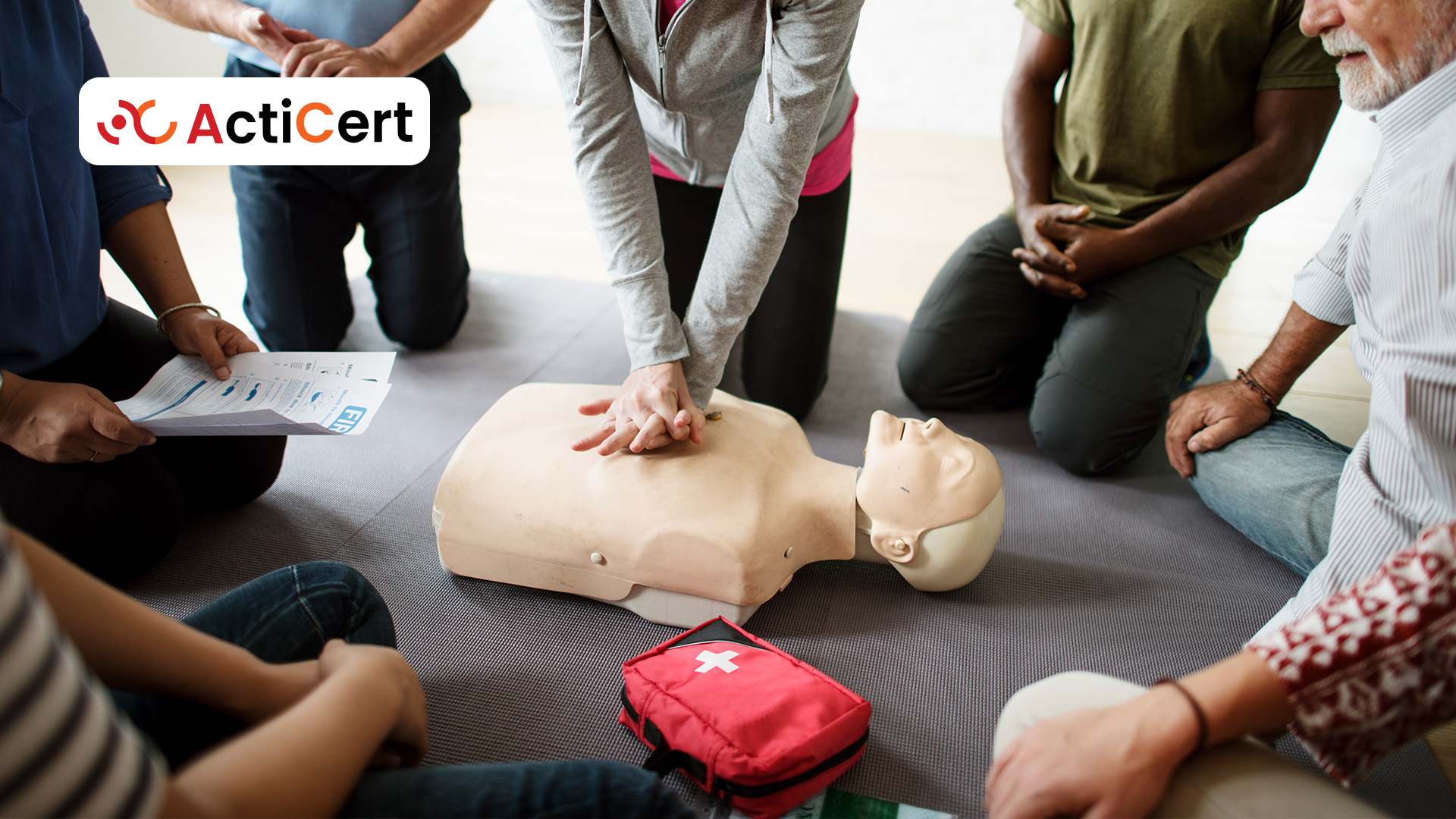
People often imagine a first aid course as an old school lecture in high school gym class or part of mandatory military training: a group stands around a dummy of a human body while a crew-cut-and-jogging-paints-sporting instructor barks orders, then makes the class practice themselves. There’s lots of dramatic heavy breathing exercises and rote learning.

That image is born out of a lot of experience and there’s still some of that in today’s first aid training. However, there is more than meets the eye in modern first aid: how to create a dressing for bone fractures, how to stop chocking, or how to use a modern defibrillator. That’s just the short list too. A modern first aid and CPR course is jam-packed with all kinds of life saving practices that equips one to be ready for any life-saving situation.

Saving Lives and Getting Ahead

You never know what can happen in life and when first aid skills are needed to save lives. That’s one benefit of getting certified in first aid. But employers also understand its value. When employees show they have a certification in first aid and CPR, their superiors view that as an added skill of an employee, thus allowing that person more opportunities in employment, promotion, and special assignment. Sacrificing one day to take one course can lead to new avenues for people they might not have otherwise thought possible.

You can save lives and get ahead with ActiCert’s first aid and CPR programs. Check out ActiCert.com today to learn more.

BASIC LIFE SUPPORT CERTIFICATION – THE VALUE AND PROCESS OF SAFE GLOVE REMOVAL

Every reputed basic life support certification values teaching life-saving skills. Glove removal, primary assessment, CPR (Cardiopulmonary Resuscitation and Automated External Defibrillator), airway obstruction, assisted ventilation, and basic life support considerations are those skills.

This post is the guide you need to master one of the skills mentioned above. The skill likely to be elaborated today is glove removal. It is a valuable part of every basic life support certification course these days.

We want you to learn about it. Learning this skill is the first step of the success ladder you deserve to climb in your career.

Let’s get started!

What is Glove Removal In Basic Life Support:

It is the practice of removing used and contaminated gloves. Touching the outside of the gloves with bare hands is avoided in this process. Every lifesaver must ace this art on a priority basis for several reasons. For example:

  • Personal safety from diseases and infection.
  • It ends bodily contact with the patient’s body.
  • Safe end of contact with bodily fluids.
  • To ensure hand hygiene.
  • To get ready to leave the patient’s environment.
  • To ensure professional hygiene.
  • To get ready to leave the patient’s environment.
  • Prevention of infections and equipment preservation.
  • Prevention of cross-contamination by harmful germs, pathogens, and chemicals.

This list is nothing but the tip of the iceberg! You will have more reasons to champion this art once you enroll in a basic life support course to be a lifesaver.

Understand this to make the process of glove removal easy for yourself. You will learn how to remove specific types of gloves safely.

The first thing you need to understand is the types of gloves every lifesaver uses.

Types of Gloves Basic Life Support Specialists Use:

Lifesavers use different types of gloves. Take a look at the list of gloves they use during critical circumstances:

  • Latex Gloves.
  • Nitrile Gloves.
  • Polyethylene Gloves.
  • Vinyl Gloves.
  • Powdered or powder-free gloves.

Let’s now talk about the value these gloves offer. You will know why all basic life support specialists prefer to use all these gloves while saving a life under critical circumstances.

Let’s Begin The Discussion With Latex Gloves

Latex gloves are cost-effective and biodegradable. The quality of their natural feeling and sensitivity is matchless. All healthcare and medical care organizations with budget constraints prefer to use these reasons.

Enough about the benefits of latex gloves. There are some disadvantages to using latex gloves. Every basic life support provider should know those disadvantages.

  • Unlike nitrile gloves, latex gloves are less chemical-resistant.
  • Latex gloves cannot be used effectively in situations with chemical exposure
  • Don’t use latex gloves if you or the patient have a history of allergies. This mistake can lead to skin reactions, respiratory issues, or anaphylactic shocks.

Nitrile gloves could be better options under certain circumstances.

The Value Nitrile Gloves Offer:

Nitrile gloves are a perfect option for individuals with a history of latex allergy. Fitting, comfort, chemical resistance, strength and durability, and powder-free options are major advantages of nitrile gloves for all first-aiders.

You’ve read it right! All BLS certification holders prefer nitrile gloves for the reasons mentioned above. These gloves are latex-free and do not cause skin irritation or severe allergic reactions.

Moreover, disposable nitrile gloves are usually their first choice for better protection against bloodborne pathogens under critical circumstances. Their extra puncture resistance and durability as compared to latex gloves. 

BLS certification holders usually do their duty under critical circumstances. They face exposure to chemicals and hazardous materials every day. For this reason, they deserve an extra layer of protection against a broader range of chemicals and solvents.

Nitrile gloves are available in different sizes. Nitrile gloves offer a comfortable fit like latex gloves.

What is more important is the availability of various types of powder-free nitrile gloves. As a result, the risk of skin irritation and allergic reaction for the BLS certification holders and patients is reduced automatically

Vinyl Gloves:

These synthetic gloves are manufactured using PVC (Polyvinyl Chloride) resins, additives, and plasticizers. Affordability, comfort, hassle-free availability, design that offers protection and dexterity, and availability in various sizes encourage basic life support certification holders to use these gloves. These gloves are latex-free(Hypoallergenic) and easy to wear and remove.

Vinyl oils are resistant to water, oils, and fats. They are anti-static and free of latex, protein, and allergies. Basic life support specialists can easily wear them in no time while trying to save a life under critical conditions. Vinyl gloves are the best choice for short-term tasks.

Vinyl gloves are used in various industries and daily situations. For example:

  • Healthcare and medical settings,
  • Safe food handling and service.
  • Laboratory and scientific research.
  • Usual household and cleaning routine.

These are some good things about Vinyl gloves. Knowing just one side of something is like seeking little knowledge. We expect you to understand it. Little knowledge is always a dangerous thing.

For this reason, we suggest you learn some things that are more crucial for you to know about Vinyl gloves. We are actually asking you to know about the disadvantages of vinyl gloves.

That’s right! There are some disadvantages of vinyl gloves.

Limited durability, non-stretchability, limited chemical resistances, the requirement of proper disposal to reduce environmental impact, the requirement of proper storage and regular cleaning, and unsuitability for use in high-risk environments are some disadvantages of vinyl gloves that every basic life support certificate holder should know about.  

Even loose fitness, less elasticity, chances of a puncture due to cuts, and low protection level are some causes of concern if you are using vinyl gloves. Extra stretching can compromise the protective barrier of vinyl gloves easily. This is the biggest disadvantage of vinyl gloves. 

Polyethylene Gloves:

Polyethylene gloves are manufactured using durable plastic to offer solid protection of hands for basic life support certificate holders against oils, chemicals, solvents, caustics, and other hazardous materials.

Those who wear these gloves experience minimal barrier between their skin and the chemical. Full credit to the disposability, durability, and flexibility of polyethylene gloves.

These gloves are available in thin and medium-weight categories. Every BLS certification holder must value their thickness while purchasing polyethylene gloves. The thickness of these gloves determines the level and quality of protection your hands get.

Polyethylene gloves offer many benefits. For instance:

  • The risk of cross-contamination gets reduced significantly.
  • The risk of injury is reduced by manifolds.
  • The cost of polyethylene is more affordable compared to latex gloves.
  • Proper storage is not required.
  • Polyethylene gloves can be tossed in a jar and kept clean easily for next use.
  • Don’t want to use it next time? No problem! No need to wash or sanitize. Simply trash.
  • BLS certification holders can wear polyethylene gloves while handling hazardous chemicals.

All these benefits make it easy to accomplish challenges that need a higher level of glove use while saving a life under critical conditions. There are two different types of polyethylene gloves. For instance:

  • Barrier disposable polyethylene gloves.
  • Non-barrier disposable polyethylene gloves.

Barrier disposable polyethylene gloves offer BLS certification holders solid protection against bacteria, viruses and other microorganisms.  Non-barrier disposable polyethylene gloves are easily affordable amd commonly used for the following purposes:

  • Paper handling.
  • Food services.
  • Healthcare services.
  • Janitorial services.

Make sure you choose the right type of polyethylene glove. It depends on the following:

  • The task you want to accomplish.
  • The circumstances you are working in.

Powdered or powder-free gloves:

Basic life support professionals frequently use powdered or powder-free gloves while saving lives under critical conditions. Professional lifesavers with clammy hands find it easy to wear powdered gloves. Removing them is also an easy task. Better quality of grip, cost-effectiveness, familiarity, and comfort are some more benefits of using powdered gloves.

What is more important is the spread of diseases or infections between the basic life support specialists and patients is also prevented efficiently using powdered gloves. Another thing you should know is the type of powder used in such latex gloves.

Spores, talcum, and cornstarch are the three different types of powders used in powdered gloves. The use of powdered gloves for saving a life is nowadays limited. The use of powdered gloves usually causes many health issues for patients. The list includes but is not limited only to the following:

  • Adverse reactions.
  • Post-surgical adhesions
  • Wound inflammation
  • Severe airway inflammation.

On the other hand, powder-free (Non-powdered) gloves are without powder (Spores, Talcum, and Cornstarch). Such gloves offer several advantages. For example:

  • Skin-friendliness.
  • Extra strength and durability for tough industries.
  • Extra versatility with food items, chemicals, and oils.
  • Extra water resistance.
  • The risk of contamination is reduced significantly.
  • Extra grip and dexterity for handling critical situations.

These advantages are the reasons why basic life support providers use powder-free gloves.

Powder-free (Non-powdered gloves) are usually manufactured using latex, nitrile, and vinyl. Powdered gloves are manufactured using NRL (Natural Rubber Latex). The material used to manufacture powdered gloves is usually coated with cornstarch, spore, and talcum. 

Basic life support providers use these gloves in food, catering, processing industries, laboratories, scientific industries, mechanical, healthcare, medical care, hair care, and beauty industries.

You now have some knowledge about the types of gloves used for basic life support under critical conditions. You are now all set to learn about the process of removing gloves safely.

Process To Remove Gloves Safely:

We have already told you the importance of safe glove removal. We are not going to tell you about it again here. Instead, you are going to learn the safe process of glove removal for a basic life support certification holder after the task is completed.

Follow the steps mentioned below:

Grab one of your gloved hands from the outside. Grab it on top of your wrist.

Do not pinch yourself and develop contact with your bare skin, arms, or scrubs in this process.

  • Peel off disposable gloves away from your body, fingers, and hands. Expose the interior of your gloves for your safety and sanitation purposes.
  • Use your other gloved hand to hold it in your palm.
  • You should now put your ungloved hand inside the other glove at the top of the wrist.
  • Again, avoid pinching yourself.
  • Again, avoid contact with your bare skin, arms, and scrubs.
  • Peel off disposable gloves away from your body, hands, and fingers once more.
  • You should expose the interior of gloves for your safety and sanitation one more time.
  • A Basic life support certification holder should always ensure the disposal of gloves the right way. Put them in the right trash can to ensure everyone’s safety.

Avoid snapping this process. Another important thing throughout the process is your presence of mind. Lack of it could result in a serious mistake that could be fatal for you or the patient.

ActiCert BLS certification gives you a perfect chance to master the art of glove removal safely while trying to save a life under critical circumstances. You will learn a lot more about it than what you have learned through this post. Our experienced and certified tutors will guide you about it in-depth to help you understand the way you should remove gloves safely to keep yourself and the patient safe from health hazards.

Interested? Enrol now!

EMERGENCY FIRST AID – LEARN TO HANDLE RESPIRATORY AND CIRCULATORY CASES

The cases of breathing and circulation emergencies in Canada are increasing. As a result, the number of phone calls for emergency first aid in Canada is rising. The aging population, poor air quality, climatic conditions, delayed care during the COVID-19 pandemic, lack of public awareness and bystander response, and increased emergency department visits are some common reasons for this.

This is encouraging Canadian youngsters to learn about the Red Cross, the EMS system, airway emergencies, wound care, the check, call, & care system, first aid for respiratory and cardiac arrest, and the art of preparing to respond to medical emergencies. They are showing interest in learning about breathing and circulation emergencies and are registering for emergency first aid courses. Many youngsters are building a rewarding career with this Red Cross certification course.

The course allows them to learn about different types of breathing and circulation emergencies. As a result, they find it easier to prepare for such emergencies. But how?

This is what we are going to discuss in this post.

What Is a Breathing Emergency?

A breathing emergency is a severe medical condition. A person facing this situation finds it hard to breathe or can’t breathe at all. Such a situation usually leads to severe oxygen deprivation or death.
Medical conditions like asthma, pneumonia, allergic reactions, pneumothorax, choking, COPD, heart attack, pulmonary embolism, agonal respiration, dyspnea, pleural effusion, respiratory failure, upper airway obstruction, whooping cough, croup, chest wall movement, neurologic conditions, blood clot in the lungs, HAPE, injury to the neck, chest wall & lungs, pericardial effusion, near drowning, and wheezing are some major breathing emergencies.

Rapid breathing, inability to breathe while lying down, the need to sit up to breathe, anxiety, agitation, sleepiness, confusion, dizziness, light-headedness, pain, fever, cough, nausea, vomiting, bluish lips, fingers, and fingernails, unusual chest movement, gurgling, muffled voice, making whistle-like sounds, difficulty in speaking, bleeding during coughing, sweating, and irregular heartbeat are some symptoms of breathing emergencies.
Those who enroll in an emergency first aid blended (Levels A or C) Red Cross certification course learn several things about it. The list includes, but is not limited to, the following:

  • What is it?
  • Its types.
  • Its symptoms.
  • First aid treatment for it.
  • Things to avoid.
  • When to contact a medical professional.
  • Its alternative names.

Emergency first aid blended (Levels A or C) Red Cross certification teaches you much more than this. You realize this only once you enroll in a relevant course.

Different Types of Breathing Emergencies

There are different types of breathing emergencies. The list includes, but is not limited to, the following:

  • Respiratory Arrest:

Problems like cardiac arrest, drug overdose, choking, severe asthma, or trauma are some major reasons for this cessation of breathing. Some common symptoms of respiratory arrest are mentioned below:

  • No breathing.
  • Unconsciousness.
  • Cyanosis (Bluish skin).

Artificial ventilation, immediate cardiopulmonary resuscitation, and professional medical help are the best solutions to deal with such a medical emergency. An emergency first aid blended (Levels A or C) course is the best way to learn about it in detail.

Respiratory Distress:
Difficulty in breathing is respiratory distress. This precursor to respiratory arrest happens mainly because of problems like asthma, pneumonia, COPD, allergic reactions, or injury. Mentioned below are some common symptoms of respiratory distress:

  • Rapid or shallow breathing.
  • Wheezing.
  • Gasping for air.
  • Pale or bluish skin.
  • Anxiety.

Listed below are some measures you can take if you see someone experiencing respiratory distress:

  • Immediately call for first aid and medical help.
  • Help the victim sit in a comfortable position.
  • Arrange a prescribed medication like an inhaler for the victim.
  • If needed, call for professional medical help.

If left untreated, it can lead to death. Those who want to learn about it in detail can enroll in a reputed first aid blended (Levels A or C) certificate course.

  • Asthma Attack:

Airway constriction caused by inflammation or mucus is called asthma. Problems like wheezing, shortness of breath, chest tightness, and coughing are some common symptoms of asthma.
Arrange rescue inhalers and ensure trigger removal. Call professional medical help if you don’t see any improvement in the victim’s condition. Enrollment in an emergency first aid certificate course can help you learn all of this in detail.

  • Anaphylaxis (Severe Allergic Reaction):

Food allergens, insect stings, and medications cause this severe allergic reaction. As a result, the victim experiences airway swelling. An anaphylaxis patient usually shows the following symptoms:

  • Problems in breathing.
  • Throat swelling.
  • Tongue swelling.
  • Rash.
  • Shock.

Arrange an EpiPen. Ensure CPR if needed. How? This is something you will learn once you enroll in an emergency first aid course.

  • Choking:

Airway obstruction due to foreign objects results in choking. Problems in speaking, coughing, clutching the throat, and cyanosis are symptoms of choking. An emergency first aid course can teach you all the best processes and procedures to save the patient from choking.

  • Hyperventilation:

The level of carbon dioxide in the blood drops significantly. This drop causes excessive breathing. Problems like dizziness, chest pain, rapid breathing, and tingling in the extremities are its symptoms. An emergency first aid blended (Levels A or C) certification course can help you learn the best ways to help patients get relief from this problem.

  • Chronic Obstructive Pulmonary Disease Exacerbation (COPD):

COPD is the worsening of respiratory problems in people. Persistent cough, difficulty in breathing, fatigue, and increased mucus are its symptoms. People experiencing COPD need immediate first aid and medical help. Emergency first aid certification holders are qualified to provide initial treatment.

  • Croup:

Many young children face this viral infection. They experience swelling in their airways and show symptoms like barking cough, difficulty breathing, and hoarseness.

  • Near Drowning:

Near drowning usually causes problems with breathing. Issues like coughing, unconsciousness, and frothy sputum are some more problems victims face. People who face this problem need first aid treatment. You can learn about the initial treatments through an emergency first aid certification course to help patients.

  • Smoke Inhalation:

Inhaling toxic gases, soot, or fire & chemical particles causes difficulty in breathing, coughing, and confusion. People facing this condition need immediate help. You can gain all the knowledge required to move patients to fresh air, seek emergency medical care, and administer oxygen through an emergency first aid certificate course.

  • Pneumothorax:

There is a space between the lung and the chest wall. Air leaks into this space, causing the patient’s lungs to collapse. In such a scenario, patients experience symptoms like sudden sharp chest pain, shortness of breath, and rapid heart rate. Immediate first aid is required in such cases. An emergency first aid course equips you with all the knowledge you need to deal with such a serious respiratory emergency. A certified first aid provider can provide immediate initial treatment to save the victim.

What Is a Circulation Emergency?

A circulation emergency is a medical condition that significantly hinders blood flow in your body. Such a condition prevents oxygen and nutrients from reaching bodily organs and usually leads to the following:

  • Organ failure
  • Death (If not treated)

Immediate restoration of blood flow to the bodily organs is a must to treat circulation emergencies. Emergency first aid certificate holders are eligible to provide the immediate initial treatment required.

Different Types of Circulation Emergencies

There are different types of circulatory emergencies. All these emergencies occur due to varying types of circumstances or injuries. Listed below are some types of circulatory emergencies:

  • Cardiac Arrest:

Cardiac arrest is a major circulation emergency. The patient needs immediate first aid before professional medical help. In such a scenario, one of the following happens:

  • The patient’s heart stops beating.
  • The patient’s heart becomes unstable and cannot pump blood.

Sudden collapse, no pulse, and no breathing are some major symptoms of cardiac arrest. You must complete your emergency first aid blended certification course to be able to provide the first aid a cardiac arrest patient immediately needs.

  • Shock:

It is a state when the blood flow does not fulfill the body’s requirement. Rapid heartbeat, low blood pressure, confusion, and pale or clammy skin are problems patients face due to this condition. Hypovolemic, cardiogenic, septic, and anaphylactic are its types. Severe blood loss for any reason causes hypovolemic shock. Cardiogenic shock happens due to heart failure, while severe allergic reactions result in septic or anaphylactic shock.

  • Severe Bleeding (Hemorrhage):

Severe injuries, fainting, and low blood pressure lead to excessive blood loss. Excessive blood loss results in hemorrhage. Such patients need immediate emergency first aid under all circumstances. You can provide it once you are a certified professional.

  • Deep Vein Thrombosis and Pulmonary Embolism (DVT and PE):

DVT is the formation of blood clots in deep veins, typically
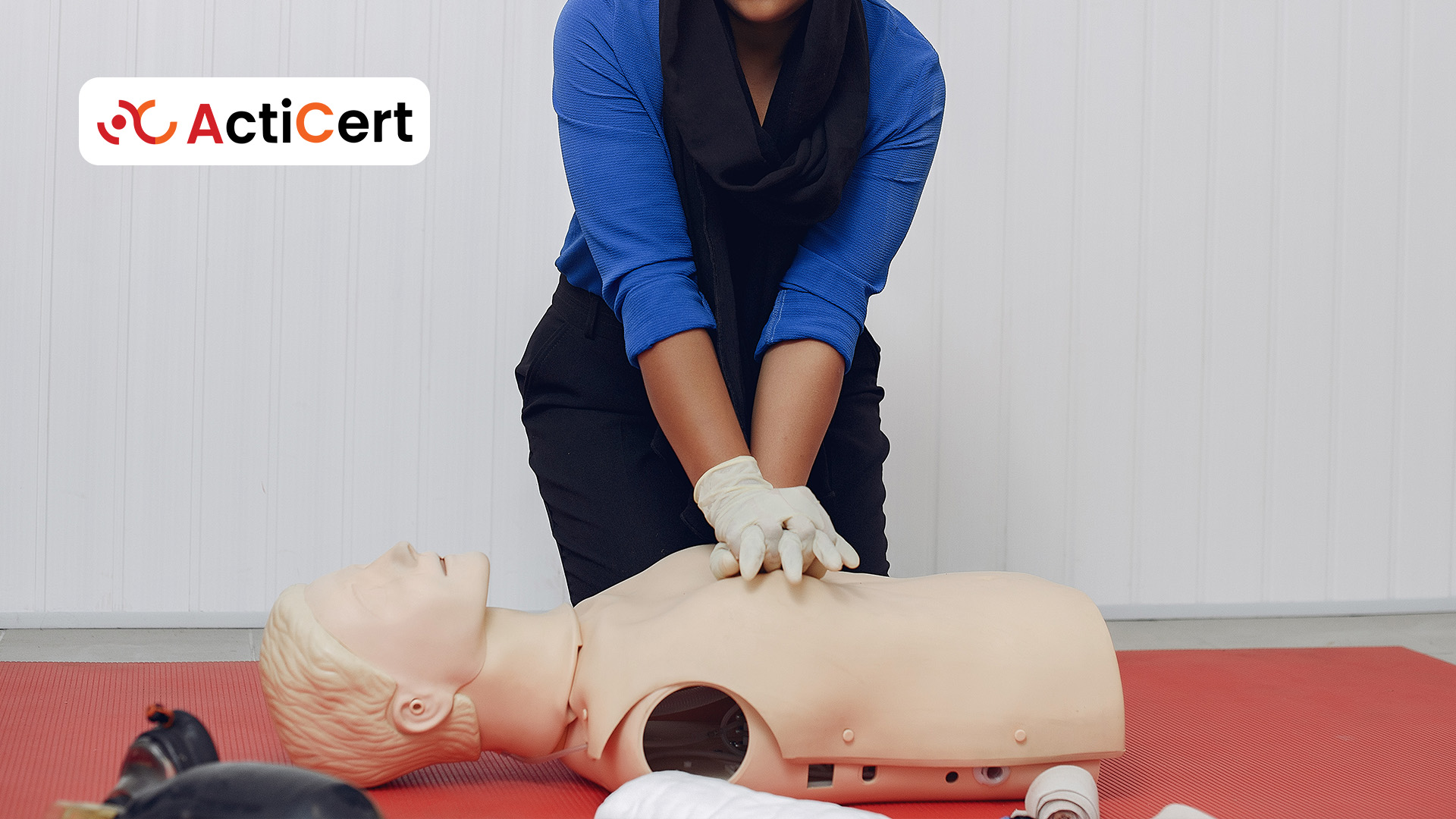
CPR CERTIFICATION – RECOGNIZE AND RESPOND TO ANGINA AND HEART ATTACKS

A CPR certification course is one of the best ways to learn about the Red Cross, responding to emergencies, taking recovery positions, checking patients, and calling for further medical help. The course is mainly dedicated to improving your knowledge about the following:

  • Choking in adults, children, and babies.
  • The art of assisting with medications.
  • Angina and heart attack.
  • Stroke.
  • Deadly bleeding.

Many young Canadians now enroll in Red Cross certifications. Must enroll in CPR certification courses. They chose this career path to master the skills required to recognize and respond to the following emergencies among adults, children, and babies:

  • Cardiopulmonary resuscitation emergencies.
  • Choking.

It entirely depends on the level of CPR chosen. The objective of this post is to tell you about the way this certification course increases your knowledge about recognizing and responding to angina and heart attacks.

What is an Angina Attack?

This medical condition is the result of narrowed-blocked coronary arteries. Lack of enough blood supply to the heart causes it. Those who experience this problem complain about the following symptoms:

  • Discomfort in the chest.
  • Heaviness in the chest.
  • Chest tightness.
  • Discomfort in arms.

The pain reaches the following organs of the patient’s body:

  • Back.
  • Shoulders.
  • Neck.
  • Jaws.
  • Arms.

These are some common symptoms of angina attack.

Types of Angina Attack:

You taught many things about angina attacks during your cardiopulmonary resuscitation certification course. The different types of angina attacks are one of those things. Mentioned below are different types of angina attacks:

  • Stable Angina-

The most common form of angina attack. Exertion is the biggest reason for it. It vanishes with the right treatment. It is predictable and hardly lasts for a couple of seconds to minutes.

  • Unstable Angina-

This is a serious medical emergency. A CPR-AED Certification holder must learn to avoid this type of angina attack. The attack lasts for about 20 minutes or more. The patient’s condition may worsen if pain occurs even with less physical effort. It becomes a heart attack under the following circumstances:

  • If blood flow does not improve.
  • If a patient’s heart does not get enough oxygen supply.

An unstable angina attack is more dangerous compared to a stable angina attack. It could be life-threatening. Therefore, a Red Cross CPR certification holder must be able to recognize it immediately to prevent the inevitable.

  • Variant Angina Attack-

Prinzmetal angina is another name of this angina attack. It does not happen due to coronary artery disease or blockage. Spasms in the heart’s arteries are responsible for it. The spasm reduces blood flow to the heart for some time. Those who face this problem complain about intolerable chest pain in cycles at rest or overnight. Angina medicine or initial treatment by an experienced Red Cross certification holder can help reduce the pain.

  • Refectory Angina Attack-

It is a chronic medical condition that occurs frequently and when blood flow to the heart reduces. It happens when the heart’s demand for oxygen exceeds its supply of blood supply. The sensation of pressure and pain in the chest are two main symptoms of it. Regular medication and lifestyle changes can help you manage the impact of a refractory angina attack. The role of an experienced cardiopulmonary resuscitation certification can be very important in this entire process.

  • Microvascular Angina-

This happens when someone experiences a lack of blood flow in one or more of the smaller blood vessels responsible for ensuring enough supply of blood constantly to your heart. Cardiac syndrome X or coronary microvascular dysfunction are two more names for microvascular angina attacks. You can include lifestyle changes instead of sparing time for a stent or heart bypass surgery.

Angina Attack Prevention

Several factors, including but not limited to poor lifestyle choices like smoking, dietary preferences, excessive weight, lack of physical activity, and low mental health and overall well-being, are some common reasons for angina attacks.

All experienced doctors and CPR certification holders advise patients to switch to a healthy lifestyle. This lifestyle change will reduce or eliminate the possibility of another angina attack that could result in a heart attack or cardiac arrest.

Certain lifestyle changes can help with reducing angina issues. One ought to…

  • Quit smoking immediately.
  • Obey your medical prescription.
  • Value healthy eating and drinking choices and practices.
  • Get rid of those extra pounds.
  • Include a lot of physical activity or exercise in your routine.

If needed, look for an experienced Red Cross CPR certification holder available at the scene to handle an emergency case.

You can enroll in a course to be capable of recognizing and handling such a medical emergency under critical circumstances.

ActiCert offers you a chance to be a Red Cross CPR certification holder. The certification will open floodgates of opportunities you need to grow on the financial and career front. The course fulfills legislation requirements for provincial/territorial worker safety and insurance boards. This continuous course includes all the latest Cardiopulmonary resuscitation guidelines and training in AED’s (Automated External Defibrillator) use.

The course is conducted in two parts mentioned below:

  • CPR-AED Levels A blended.
  • CPR-AED Levels C blended.

Level B of this Red Cross CPR certification course offers 3 hours of online learning plus 2 hours in-class to students. Those who want to know about the value Level A of this certification offers should get in touch with our support staff. The team would love to answer all your questions about it.

Level A of this Red Cross CPR certification guides about the Red Cross, the process of checking the patient, calling for medical help, and taking care of a patient under critical circumstances, the protocols related to responding to emergencies like stroke, deadly bleeding, adult choking, and angina and heart-attack, knowledge related to recovery position, and assisting with medications.

Level C of this Red Cross CPR certification guides learners about level A content, choking in children and babies, and CPR and AED for children and babies as well.

Those who enroll now will get access to participant materials like cardiopulmonary resuscitation print or e-book publications, a detailed e-guide related to first aid and CPR, CPR digital access (in blended courses only), and a digital CPR certificate issued once you complete your course successfully.

Students must be above 18 years of age to enroll in this CPR certification course. As well, students will get your certificate once you successfully demonstrate skills and critical steps learned and score over 75% marks for written knowledge evaluation.

ActiCert encourages students to explore our courses section to know more about the value this course can add to your career. Enroll quickly to grab your spot—seats are filling up. Hurry! Fill out the quick application form to register now! 

RED CROSS BLS CERTIFICATIONS – TYPES OF ASSISTED VENTILATION

Red Cross BLS certifications are for those who want to master the art of glove removal, primary assessment, CPR/AED (Cardiopulmonary Resuscitation/Automated External Defibrillator), airway obstruction, assisted ventilation, and relevant considerations. 

We have already discussed enough about one of these concepts. We would like you to learn something about a new concept through this post.

What Is Assisted Ventilation In Red Cross Basic Life Support Courses:

It is a technique implemented to fill a patient’s lungs with atmospheric air/supplemental oxygen. This technique is used under the following circumstances:

  • Respiratory arrest.
  • Irregularity in patient’s respiratory rates.

A patient’s respiratory rate should be no lower than ten breaths per minute or no higher than thirty breaths per minute. The technique is used if a patient struggles to breathe adequately and appropriately. 

Types of Assisted Ventilation

This technique is a crucial component of Red Cross BLS certification in many ways. Listed below are all the major types of assisted ventilation techniques used in a BLS course:

  • Mouth-to-mouth Ventilation

This is a necessary part of the cardiopulmonary resuscitation process. It is used if a pocket mask or bag mask is unavailable. It is the best way to ensure oxygen supply to a patient’s lungs.

It does not put the rescuer at a high level of risk. A Red Cross BLS certification helps learn steps to perform mouth-to-mouth ventilation to revive patients.

  • Mouth-To-Barrier Device Ventilation:

Mouth-to-barrier device ventilation, also known as a pocket mask, is a barrier-protected resuscitation method. This specialized form of rescue position diverges from the following techniques:

  • Mouth-to-mouth technique.
  • Mouth-to-nose technique.

It helps prevent infection transmission between pocket mask rescuer positions and the patient. 

You will need the following two things to implement this technique successfully to save a life under critical circumstances:

  • Knowledge of CPR protocols.
  • Complete knowledge about the comprehension of this specialized technique.

A Red Cross CPR certification online can help you master both things. 

This technique is used for the following purposes:

  • To assess the emergency.
  • To initiate the distress call to the rescue team.
  • To stabilize the patient in a rescue position.
  • To ensure the patient is supine in a solid position.
  • To facilitate hassle-free respiration use the head-tilt/chin-lift technique to open the airway passage.
  • To select and align a pocket mask to cover the nose and oral cavity of the patient.
  • For establishing the airtight interface between the following to ensure the elimination of oxygen’s escape:
  • Pocket mask.
  • Facial contour.
  • Ensure ventilatory support delivery at a frequency of at least an inhalation every two seconds.
  • To monitor the following after inhalation for the verification of resuscitation’s efficacy:
  • Thoracic elevation.
  • Depression.

A Red Cross CPR Certification is the best way to master this technique and its concepts. 

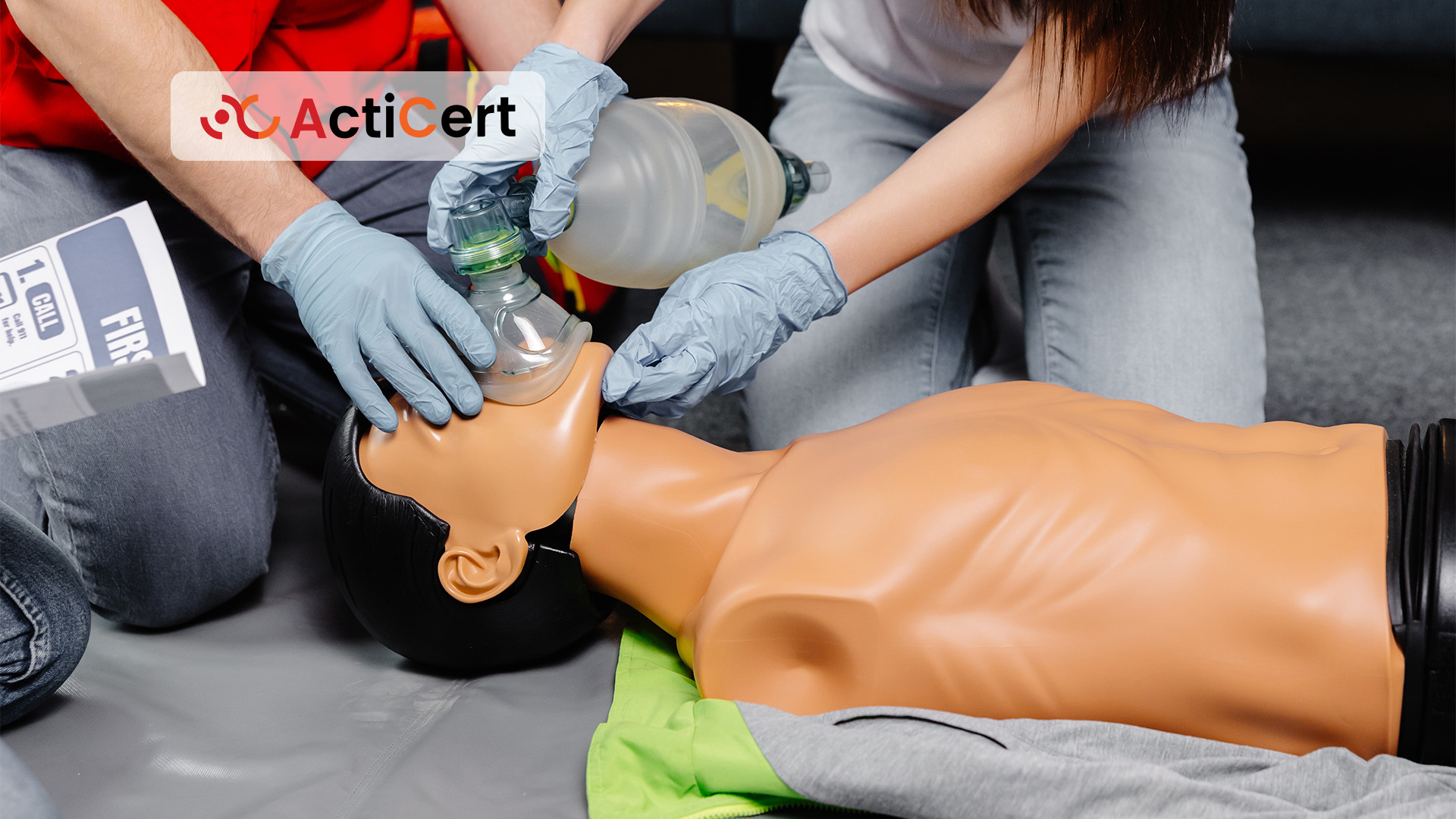
  • BVM (Bag Valve Mask) Ventilation:

BVM is not an easy skill to master. Enrollment in a Red Cross certification online is the best way to master this skill. This skill is essential during emergency circumstances. The use of this technique is necessary to deal with the following cases:

  • Hypercapnic respiratory failure.
  • Apnea.
  • Altered mental status compromised airway protection.
  • Hypoxic respiratory failure.
  • Anesthetized patients may need it during elective surgery.

You will learn about it in detail through a course. What is better than a Red Cross certification online to learn about it in detail? Being a part of a relevant course helps you learn many more things related to it. For instance:

  • The equipment you need for it.
  • The preparations required for it.
  • BVM (Bag Valve Mask) technique or treatment.
  • Complications.
  • Its clinical significance.
  • The way it enhances the healthcare team’s outcome.

You need correct and complete knowledge about these things to climb the success ladder in your career. 

  • Mouth-to-stoma Ventilation:

All Red Cross basic life certification holders learn about this technique on a priority basis. It provides artificial ventilation to patients who undergo a surgical procedure called tracheostomy. It helps deliver air directly to the stoma during the CPR process. 

Positioning, sealing, breathing, and chest rise observation play a role in it. Almost every Red Cross certification online teaches about it. It is required to deal with cases related to respiratory arrest, choking, cardiac arrest, severe respiratory distress, traumas, or injuries related to the chest or neck. 

Learn the art of performing mouth-to-art stoma ventilation. For example:

  • You learn to make an airtight seal using your lips near the stoma.
  • The process to blow the air in to make the chest rise clearly.
  • The process of ensuring the supply of rescue breath into the stoma while performing CPR is another thing you learn.
  • The best practices to keep the airway in a neutral position.
  • The best practices required to look, feel, and listen to breathing by placing your ear over the stoma.
  • The reason for not allowing the patient’s chin or head to flex forward towards the chest.
  • Why a patient’s chin or head should not extend backward.

There are several types of Mouth-to-stoma ventilation techniques. For example:

  • Direct mouth-to-stoma.
  • Mouth-to-stoma head tilt.
  • BVM (Bag Valve Mask) to stoma.
  • Pocket mask to stoma.
  • Rescue breathing with manual ventilation.

All of these techniques are used under different circumstances. Those who want to learn about these mouth-to-stoma techniques enrol in a Red Cross BLS certification online

  • FROPVD:

FROPVD (Flow Restricted Oxygen Powered Ventilation Device), also known as MTV (Manually Triggered Ventilation Device), is a machine used under the following circumstances:

  • To assist ventilation in apneic patients.
  • To assist ventilation in hyperventilating patients.
  • To provide supplemental oxygen to breathing patients.
  • To treat patients breathing spontaneously.
  • If the patient is not breathing.
  • If the patient is struggling to breathe.
  • To provide breaths until the chest rises.
  • To deliver oxygen 100% to patients’ lungs at a peak rate flow.

There are different types of FROPVD ventilation techniques. All these techniques are used under different circumstances mentioned above. Take a look at the FROPVD types below:

  • PPV (Positive Pressure Ventilation).
  • Assisted Ventilation.
  • CPAP (Continuous Positive Airway Pressure).
  • IPPV (Intermittent Positive Ventilation).
  • Bilateral Ventilation.

Another important thing a Red Cross basic life support certification holder must know about is the list of FROPVD devices used to deal with the circumstances mentioned earlier. Take a look at the list of FROPVD devices below:

  • FROPVD with Face Mask.
  • FROPVD with Endotracheal tube.
  • FROPVD with Tracheostomy tube.
  • Pediatric FROPVD.
  • Automatic FROPVD.
  • Two-person BVM Ventilation:

This ventilation technique is used under the following circumstances:

  • If the patient is not breathing.
  • If the patient is struggling to breathe.
  • If the patient needs assistance to breathe.

It is a BVM (Bag Valve Mask) technique implemented by two Red Cross certification holders (rescuers) together. Two professionals work together to implement this technique. It helps patients breathe easily and offers several more benefits. 

You can learn more about this technique or treatment, its complications, clinical significance, and types like standard two-person BVM ventilation, modified two-person BVM ventilation, two-person BVM with suction, two-person BVM with oxygen suction, and two-person BVM with endotracheal tube through a Red Cross basic life support certification online easily. 

Keep coming back if you want to learn more about it. We will continue posting about it regularly. Those who enrol in our Red Cross basic life support certification course online to learn more about it access the knowledge and experience of our skilled tutors.

RED CROSS CERTIFICATIONS TO STAMP YOUR SKILLS WITH CREDIBILITY

Red Cross certifications are mandatory for those who want to be professional lifesavers in Canada. Those who enroll in these certifications in the hopes of a better professional and financial life in Canada reap several benefits.

The Benefits of Red Cross Certifications:

These certificate courses are important in Canada. It is because you gain knowledge, skills, and experience to be a professional lifesaver.

You Attract Professional Opportunities:

Many industries in this part of the world hire professional lifesavers. They employ certified professionals. A Red Cross certificate is a prerequisite for those who want to be professional healthcare, childcare, and elder care specialists and provide CPR, first aid, and emergency care.

They get enough opportunities as coaches, lifeguards, and fitness trainers in the domain of sports and recreation.

A Red Cross certification is mandatory in Canada even if you want to be a professional lifeguard, firefighter, paramedic, or rescue worker.

Legal Workplace & Compliance becomes a cakewalk for Canadian employers. The Federal Government of Canada has strictly instructed several industries to hire individuals only if they are first aid certified and CPR specialists.

Focus on hiring certified specialists helps employers comply with Canada’s workplace safety regulations and standards to avoid legal issues. 

The right to volunteer and participate in Community Initiatives is another benefit all Red Cross certificate holders get. You become a volunteer with all rights to assist in the following:

  • Disaster relief efforts.
  • Public safety initiatives.
  • Community health programs.

All in all, you get a chance to become an invaluable asset to society.

Access to Skill Enhancement And Public Safety Programs:

Red Cross training courses elevate the level and quality of your skills. Individuals gain the knowledge, skills, and experience required to deal effectively with medical and healthcare emergencies like heart attacks, accidents, injuries, and more to contribute to public safety.

Credibility Stamp:

Red Cross training courses add credibility to your knowledge, skills, and experience. It is because you earn your certification/recertification from a reputed Canadian institute/college/university.

Employers and patients trust a certified first aid service provider from a reputed college/institute/college. 

This is merely the tip of the iceberg! Let us tell you separately about the value every Red Cross training course adds to your career.

CPR – AED CERTIFICATION

This course loads first responders knowledge, skills, and experience required to deal with cardiovascular emergencies and choking adults, babies, and children. The certification has two levels (Level A and Level C). 

The level A content of this CPR certification guides you about the following concepts:

  • The Red Cross.
  • The art of responding to medical emergencies.
  • The process of check, call, and care.
  • The art of recovery position.
  • Choking (Adults).
  • The art of assisting with medications.
  • The art of dealing with medical emergencies like stroke, deadly bleeding, Angina, and heart attack.
  • You learn about CPR and AED (Adults).
  • Angina and heart attack.
  • Stroke.
  • CPR and AED– Adult.
  • Deadly Bleeding.

Level C of this CPR certification helps you revise your Level A Content. You gain the knowledge, skills, and experience needed to deal with Choking (Children and Babies) and CPR and AED-related issues (Children and Babies). 

Those who complete this CPR-AED CERTIFICATION increase their chances of employment in Canada.

Basic Life Support Certification:

This one is for professionals with a duty to respond. The successful completion of this certification loads with knowledge, skills, and confidence in professionals with the duty to respond to requirements to perform cardiopulmonary resuscitation in a team environment.

This BLS certification offers you value in the form of improved glove removal skills. You learn to perform primary assessment without hassles. Performing CPR (Cardiopulmonary Resuscitation) and AED (Automated External Defibrillator). Your knowledge about basic life support reaches the next level. What is more important is you learn about assisted ventilation and airway obstruction.

Do you know the most important thing? This BLS certification makes you eligible for lucrative jobs in various Canadian industries. What are you waiting for? Get it!

Emergency First Aid Blended (Levels A or C)

It is a comprehensive course loaded with knowledge to equip you with first aid and CPR skills to save lives at home, workplace, and in public places. The course offers a lot of value to students. You gain knowledge about the following:

  • The Red Cross.
  • Skills to perform and respond.
  • The Emergency Medical System.
  • Process to check, call, and care.
  • Skills, experience, and knowledge required to deal with emergencies related to airway obstruction, breathing, circulation, first aid for respiratory, cardiac arrest, and wound care.

Level A of emergency first aid blended (Levels A or C) offers you learning through 4 hours online + 3.5 hours in class. Level C of this offers the same value through 4 hours online + 4.5 hours in class. 

All the knowledge you gain through this certification helps you build a lucrative and rewarding career in various Canadian industries.

Standard First Aid Blended (Levels A or C)

The entire discussion is complete without throwing light on this first aid certification. It takes your knowledge and skills related to cardiopulmonary skills to the next level. The certification is for those who need training due to work requirements. It is for those who want to be loaded with more meaningful knowledge to respond to emergencies at home effectively.

Standard First Aid Blended (Levels A or C) takes your knowledge about The Red Cross, the art of preparing to respond, processes related to check, call, and care, airway emergencies, the EMS system, breathing and Circulation emergencies, first aid for respiratory and cardiac arrest, and wound care to the next level.

More importantly, you gain knowledge, skills, and experience needed to deal with bone, muscle, and joint injuries, environmental Illnesses, SMEs (Sudden Medical Emergencies), and several types of poisons. 

Again, this one also offers many lucrative career opportunities like all other Red Cross certifications. We suggest you enroll in this certification to elevate the quality of your career.

ActiCert has all these Red Cross Certifications in its courses portfolio. Choose the one that you want to enroll in! You will experience a difference in your career soon. 

Enrol now! Have you got a question? Call our support staff immediately!

BLS CERTIFICATION – AIRWAY OBSTRUCTION TREATMENTS EXPLAINED

A BLS certification loads lifesavers with confidence. All this confidence helps lifesavers gain the skills needed to perform CPR skills confidently in a team environment. They become more responsible lifesavers with a duty to respond.

A BLS certification loads you with several essential life-saving skills. The list includes but is not limited to the following:

  • The art of glove removal.
  • Primary assessment skills.
  • CPR & AED.
  • Airway obstruction detection skills and treatment methods.
  • Assisted ventilation.
  • BLS special considerations.

We have been talking about one of these concepts for some time. It is the concept of airway obstruction. We have decided to advance your knowledge about it. We are going to detail the following in this post for you:

  • The way airway obstruction is treated.
  • Acute upper airway obstruction.
  • Cause of upper airway obstruction.
  • The best time to seek medical attention.

The Art of Treating Airway Obstruction:

The basic life support certification course teaches you several airway obstruction treatment methods mentioned below:

  • The heimlich manoeuvre.
  • Epinephrine
  • Cardiopulmonary resuscitation (CPR).

Airway obstruction is a serious medical condition. There are many types of airway obstruction. Some of its types get treated easily. However, some types of airway obstructions can be life-threatening. If ignored, consider the inevitable on cards!

Call emergency medical services if you see someone facing airway obstruction. Allow us to discuss these treatments with you.

The Heimlich Manoeuvre:

Every basic life support certification course focuses on this emergency technique. It is applied to help if someone is choking on a foreign object. Follow the steps mentioned below to handle the situation in the best possible way!

  • Stand behind the person choking.
  • Wrap your arms around the waist of the person choking.
  • Make a fist.
  • Target the belly button with the fist.
  • Place your fist in your other hand.
  • Give five fast thrusts by pressing your fist into the patient’s abdomen area.
  • You should repeat the thrusting process until the object gets dislodged or medical services reach the scene.

Important Note: The Red Cross Society also recommends five back blows. However, some medical study-related institutes do not teach such a thing.

This emergency technique is used for infants.

Epinephrine:

Airway swelling is one of the causes of airway obstruction. It happens to people with severe allergies. Therefore, you should carry an EpiPen in your emergency medical kit. Following is the list of people who usually face this condition.

  • People are allergic to certain food items.
  • People are allergic to bee stings.

Such people have to face one of the conditions mentioned below:

  • Sudden and rapid swelling of the throat.
  • Rapid and sudden swelling of the tongue.

Such a condition results in complete airway obstruction within a couple of minutes.

What is an EpiPen?

A simple injector that carries Epinephrine is called EpiPen.

What is an EpiPen?

A basic life support specialist is asked to inject an injection into the patient’s outer thigh. Inject it as soon as the patient experiences symptoms of severe allergic reaction.

This injection is useful for a patient experiencing anaphylactic shock. Inject it while the patient waits for the medical services to arrive at the scene.

The medical professional who arrives at the scene must be a basic life support certificate holder with complete knowledge about the art of injecting EpinePhrine after evaluating the patient. Evaluate the patient as possible.

Cardiopulmonary Resuscitation (CPR):

A basic life support certification holder must be familiar with cardiopulmonary resuscitation (CPR) skills. All lifesaving skills related to the CPR process are always taught to medical emergency professionals. Skills relevant to it are used under the following circumstances:

  • If the patient is unable to breathe.
  • If the patient loses consciousness.
  • To ensure the appropriate flow of oxygenated blood to the patient’s brain.

It is done until medical services arrive at the scene.

Perform the steps mentioned below to perform CPR in such a critical situation:

  • Place the heel of your hand in the middle of the patient’s chest.
  • Target the top with your other hand.
  • Push straight down while applying your upper body weight.
  • You should repeat the process 100 to 120 times per minute.

Continue the process until an ambulance or a team of BLS certification-holder medical professionals arrive at the scene. 

Prognosis After An Airway Obstruction:

There are several types of airway obstruction treatment methods. Any treatment can be used once the ambulance arrives.

One of the following tubes can be inserted into the airways:

  • Endotracheal tube.
  • Nasotracheal tube.

The insertion of these tubes can help ensure oxygen flow through swollen airways. Two surgical openings are ensured in the airways. These two surgical openings help bypass and obstruct. Mentioned below are the names of those two surgical openings for your reference:

  • Tracheostomy.
  • Cricothyrotomy.

Medical professionals who are heavily experienced, skilled, and basic life support certificate holders perform these medical procedures when all of the methods mentioned above fail. 

Keep Watch On Prognosis After An Airway Obstruction:

Airway obstructions can be life-threatening even during the treatment. However, prompt treatment can help patients get rid of this medical condition. Seek medical help immediately if you see someone experiencing airway obstruction.

Acute Upper Airway Obstruction:

It is a blockage that interferes with the upper airway system of your body. This part of your respiratory system consists of the following organs:

  • Trachea.
  • Larynx/Voicebox.
  • Throat.

Airways obstruction prevents the flow of oxygen in all parts of your body. This problem has the potential to cause two major health issues listed below:

  • Brain damage.
  • Heart attack.

It happens within a couple of minutes. This type of airway obstruction has the potential to be life-threatening. Look for a basic life support certificate holder or call for medical help immediately if you or someone you know is dealing with such a problem.

Cause Of Upper Airway Obstruction:

People experience this problem for several reasons. Listed below are those reasons for your reference:

  • Anaphylaxis
  • Croup
  • Epiglottis
  • Inhaling a foreign object or food.

The Best Time To Seek Medical Attention:

Don’t be lazy in this matter. Call a basic life support certificate holder or medical help immediately. Agitation, confusion, panic, drooling, swollen face, swollen tongue, difficulty in breathing, wheezing, choking, unconsciousness, and other unusual breath sounds are some common symptoms of UAO (Upper Airway Obstruction).

The list of signs varies sometimes. The signs of UAO could be different among two patients. Cyanosis can also be a symptom of upper airway obstruction. Cyanosis occurs due to a lack of oxygen in the patient’s body. It gives the following a bluish color:

  • Your skin.
  • Your lips.
  • Your fingernails.

Immediately call a medical professional with a basic life support certificate for help if you notice a bluish tint in these organs/parts of your body.

Knowledge is a deep ocean. It never ends. You will continue finding something new every time you deep dive into this ocean. Therefore, keep coming back here to learn more about the concept.

Come back acticert to enroll in the best BLS certification course in Canada. You will learn about it and many more concepts. Call our support staff if you need help to enroll! Assistance is just a call away!